The Collected Works of Leo Tolstoy
About this ebook series
This poignant story, rooted in a historical Polish uprising, delves into the severe fate of exiles, persuasive readers to confront the deep injustices of state power and the lasting human quest for freedom and familial bond. Its genesis in a true account shows Tolstoy's deep engagement with historical suffering.
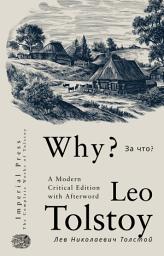
"Why?" or "За что?" in its original Russian, was conceived between January and April of 1906 and saw publication in the same year within "Круг чтения," Volume II. This story recounts the tragic destiny of Polish individuals, directly the Migursky family, who were exiled to Siberia following the 1830 Polish uprising against Russian rule. The plot, drawn from S. V. Maksimov's "Siberia and Hard Labor" (1891), features a Polish officer exiled to Uralsk, whose fiancée joins him, leading to their marriage and the later loss of their children. A desperate attempt to escape in a coffin box fails, culminating in his banishment to Siberia, with his wife choosing to follow him into exile. Tolstoy's reliance on historical accounts, such as S.V. Maksimov's "Siberia and Hard Labor," and his specific request for books on the 1830 Polish uprising, show his commitment to factual grounding in his social critiques, lending weight to his portrayal of human suffering under state oppression.
This critical reader's edition presents a modern translation of the original manuscript, crafted for the modern reader with clean, modern language and simplified sentence structures that clarify his difficult Russian phrasing and specific antiquated references. Supplementary material enriches the text with autobiographical, historical, and linguistic setting, including an afterword by the translator on Tolstoy's personal history, impact, and intellectual legacy, an index of the philosophical concepts he employs, giving attention to Existentialism and influence by Schopenhauer, a complete chronological list of his published writings, and a detailed timeline of his life, showing the personal relationships that shaped his philosophy.