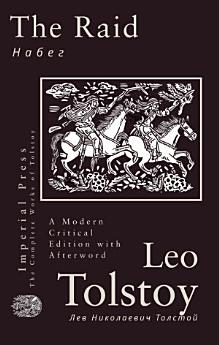
The Raid
About this ebook
"The Raid," known in Russian as "Набег. Рассказ волонтёра" (The Raid. A Volunteer's Story) and sometimes simply "Набег," was completed in December 1852 and saw its initial publication in March 1853 within the third issue of Nikolai Nekrasov's influential journal "Современник" (Sovremennik) in Saint Petersburg. This piece marks Tolstoy's second published literary endeavor, following "Childhood," and initiates his "Caucasian cycle" of writings. German translations, such as "Der Überfall" by Raphael Löwenfeld, appeared as early as 1901. The story recounts an episode from the Caucasian War, drawing directly from Tolstoy's own participation in a military campaign in July 1851, lending it an authentic, lived dimension.
At its core, "The Raid" undertakes a philosophical inquiry into the genuine nature of bravery, positing that true courage resides not in reckless abandon but in a measured fear of what genuinely warrants apprehension. This concept is embodied by Captain Khlopov, a modest soldier whose actions contrast sharply with the performative daring of other officers. The story is an overt condemnation of war, portraying it as an unnatural phenomenon born of human failings, rather than a heroic spectacle.
This critical reader's edition presents a modern translation of the original manuscript, crafted for the modern reader with clean, modern language and simplified sentence structures that clarify his difficult Russian phrasing and specific antiquated references. Supplementary material enriches the text with autobiographical, historical, and linguistic setting, including an afterword by the translator on Tolstoy's personal history, impact, and intellectual legacy, an index of the philosophical concepts he employs, giving attention to Existentialism and influence by Schopenhauer, a complete chronological list of his published writings, and a detailed timeline of his life, showing the personal relationships that shaped his philosophy.