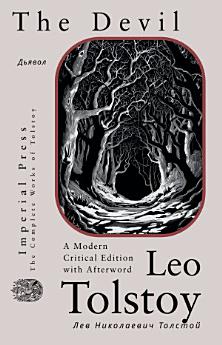
The Devil
About this ebook
The novella is a tragedy. Eugene Irtenev inherits a debt laden estate and immerses himself in its management. Feeling lonely, he engages in a paid affair with a local peasant woman, Stepanida, but eventually marries Liza Annenskaya, a middle class girl. Despite a seemingly stable life, including a newborn daughter and a prospering estate, the re emergence of Stepanida in their household rekindles Eugene's passion for her. Torn between guilt and desire, Eugene contemplates murdering Stepanida, his wife, or himself. finally, he chooses the third, leaving his family baffled by his despair, as he never confided in them about his inner turmoil. Compare this work to Dostoevsky's classic Demons, which similarly describes the parasitic nature of socio political ideologies like Socialism and Post Modernism, and the destructive nature of Epicureanism when Stoic dispassion is abandoned.
This critical reader's edition presents a modern translation of the original manuscript, crafted for the modern reader with clean, modern language and simplified sentence structures that clarify his difficult Russian phrasing and specific antiquated references. Supplementary material enriches the text with autobiographical, historical, and linguistic setting, including an afterword by the translator on Tolstoy's personal history, impact, and intellectual legacy, an index of the philosophical concepts he employs, giving attention to Existentialism and influence by Schopenhauer, a complete chronological list of his published writings, and a detailed timeline of his life, showing the personal relationships that shaped his philosophy.