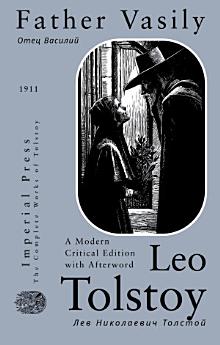
Father Vasily

The Collected Works of Leo Tolstoy Book 6 · Imperial Press
Ebook
103
Pages
Eligible

About this ebook

Father Vasily (Отец Василий) was started in September 1906, near the end of Tolstoy's life, and left unfinished; it first appeared only after his death in the 1911 volume of posthumous prose. Diary notes from 30 September 1906 record him "starting a story about a priest," and modern editors confirm composition in the autumn of that year. Tolstoy first mentioned working on this story on September 30, 1906, noting it as a "wonderful subject" that he had begun "too boldly, in detail".

This story, a product of Tolstoy's later philosophical period, delves into the deep struggles of a rural priest, studying themes of personal tragedy, spiritual resilience, and the arduous path through grief. Its posthumous publication describes Tolstoy's continued engagement with moral and existential inquiries.

In the extant fragments a rural priest, Father Vasily Mozhaisky, is roused before dawn to bring the sacraments to a dying peasant woman. The story alternates between stark exterior scenes, the frozen ruts of the road, the poverty stricken hut, and the priest's candid inner dialogue, exposing his pride, mild vanity, and sincere but clouded compassion. Tolstoy sketches a handful of vivid moments: the priest's quick morning prayer interrupted by resentment toward a drunken deacon who called him a "Pharisee," the jolting sleigh ride through snow dusted fields, and the improvised act of charity when he slips a half rouble to the bereaved family after taking their last kopek for church dues.

Though fragmentary, the story distills Tolstoy's mature assault on ecclesiastical formalism: rites are shown as secondary to the living command of mercy, and the priest's goodness flickers only when he forgets his clerical role and responds as a fellow human. The piece sits alongside late polemics like "There Are No Guilty People," carrying the same insistence that true Christianity is measured by self sacrifice rather than ritual obedience. By stripping away plot resolution, Tolstoy leaves Father Vasily suspended between hypocrisy and redemption, inviting readers to judge the church, and themselves, by deeds, dogma or tribal identity a pattern Tolstoy saw in the Social Progressivism criticized by Schopenhauer.
Father Vasily (Отец Василий) was started in September 1906, near the end of Tolstoy's life, and left unfinished; it first appeared only after his death in the 1911 volume of posthumous prose. Diary notes from 30 September 1906 record him "starting a story about a priest," and modern editors confi...

Discover more

About the author

Leo Tolstoy (1828 to 1910) was a Russian novelist, short story writer, essayist, and religious thinker. His books include War and Peace, Anna Karenina, Resurrection, The Death of Ivan Ilyich, and Hadji Murat, alongside essays on Christianity, art, education, violence, and social life.

Rate this ebook

Tell us what you think.

Reading information

Smartphones and tablets
Install the Google Play Books app for Android and iPad/iPhone. It syncs automatically with your account and allows you to read online or offline wherever you are.
Laptops and computers
You can listen to audiobooks purchased on Google Play using your computer's web browser.
eReaders and other devices
To read on e-ink devices like Kobo eReaders, you'll need to download a file and transfer it to your device. Follow the detailed Help Center instructions to transfer the files to supported eReaders.