Humanoid Robotics
About this ebook series
Humanoid robots have moved from research videos to factory floors, warehouses and homes. Building one means mastering a stack that no single book covers: electronics and embedded control, mechanical design and fabrication, actuators and sensors, ROS 2 software, physics simulation, computer vision, learning-based control, and the AI models that let a robot understand language and act on it. Humanoid Robotics covers the whole stack, one layer per volume, in hands-on depth.
Every book is written for engineers, researchers, students and serious makers who want to build, not just read about, intelligent machines. Each volume stands on its own, with complete, practical examples, exact commands and current software.
The books in this series:
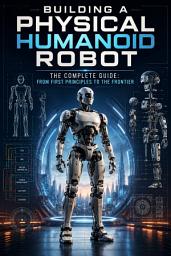
1. Building a Physical Humanoid Robot: the foundation volume, the engineering of a humanoid from first principles to the state of the art, through three complete robots.
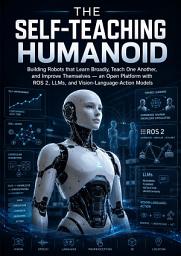
2. The Self-Teaching Humanoid: an open platform built on ROS 2, large language models and vision-language-action models, for robots that keep learning after they leave the lab.
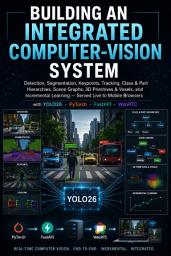
3. Building an Integrated Computer-Vision System: detection, segmentation, keypoints, tracking, scene graphs, 3D primitives and incremental learning, combined into one perception system a robot can rely on.
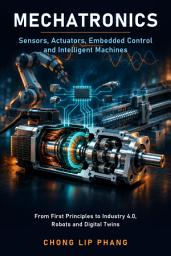
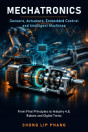
4. Mechatronics: sensors, actuators, embedded control and intelligent machines, from first principles to Industry 4.0, robots and digital twins.
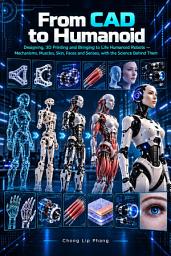
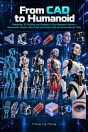
5. From CAD to Humanoid: designing, 3D printing and bringing humanoid robots to life, covering mechanisms, artificial muscles, skin, faces and senses, with the science behind them.
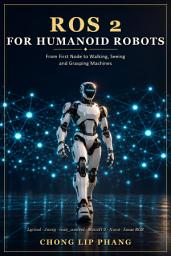
6. ROS 2 for Humanoid Robots: the Robot Operating System from first node to walking, seeing and grasping machines, with Lyrical, Jazzy, ros2_control, MoveIt 2, Nav2, Isaac ROS and Physical AI.
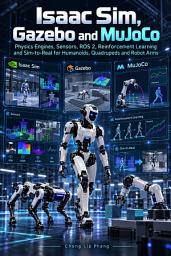
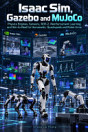
7. Isaac Sim, Gazebo and MuJoCo: the three leading robot simulators taught as one toolkit, covering physics engines, sensors, ROS 2, reinforcement learning and sim-to-real transfer.
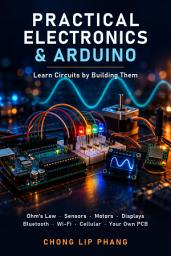
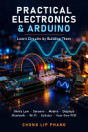
8. Practical Electronics & Arduino: learn circuits by building them, from Ohm's law to sensors, motors, Bluetooth, Wi-Fi, cellular and your own printed circuit board.
How to read the series
New to humanoids? Start with Building a Physical Humanoid Robot for the big picture.
New to electronics? Begin with Practical Electronics & Arduino, then move on to Mechatronics.
Building hardware? Pair From CAD to Humanoid with Mechatronics and ROS 2 for Humanoid Robots.
Training controllers and policies? Isaac Sim, Gazebo and MuJoCo takes you from simulation to sim-to-real.
Working on perception and intelligence? Read Building an Integrated Computer-Vision System and The Self-Teaching Humanoid.
Whichever book you start with, Humanoid Robotics gives you the knowledge to design, build, program, train and improve the humanoid robots of the coming decade.