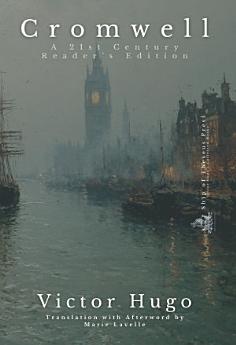
Cromwell
About this ebook
In 1827, Hugo boldly published Cromwell as a closet drama of unprecedented scope, a play so epic in length (nearly 7,000 lines) that no theater could realistically perform it in full at the time. The play's preface, yet, achieved its own immortality: a fiery manifesto that shattered the old rules of French classicism and heralded the Romantic revolution on stage. Hugo's declaration that drama must mingle the sublime and the grotesque, just as life does, stunned the literary establishment and electrified young writers across Europe. Though the play itself went largely unperformed (its frequent scene changes and colossal cast made it impractical to stage), the ideas in its introduction spread like wildfire, questioning censors and captivating a generation yearning for new creative freedom.
Written under a repressive French monarchy, the play uses England's past to comment obliquely on Hugo's present, celebrating republican ideals while warning of power's corruptions. Its famous preface explicitly argues that art must break free of artificial constraints, showing the full range of human experience. That document became a cornerstone of French Romanticism, cited for decades as the moment the "modern drama" was born. Although Cromwell the play remained largely a literary experience (an "unstageable" epic read more often than seen), its legacy lived on in every Romantic triumph that followed, from Hugo's own Hernani to the works of Dumas and Musset. Ambitious, unwieldy, but intellectually exhilarating, Cromwell is a testament to Victor Hugo's conviction that the theater of ideas could transform culture, even if the physical stage was not quite ready for his vision.
This critical reader's edition presents a modern translation of the original manuscript, crafted to help the armchair philosopher engage deeply with Victor Hugo's works through clean, modern language and streamlined syntax that clarifies his expansive ideas. Supplementary material enriches the text with autobiographical, historical, and linguistic setting, including an afterword by the translator on Hugo's history, impact, and intellectual legacy, an index of the themes and philosophical concepts he employs, giving attention to Romanticism, social justice, and moral idealism, a complete chronological list of his published writings, and a detailed timeline of his life, showing the personal relationships (including his relationship with Charles Dickens) and political commitments that shaped his vision.