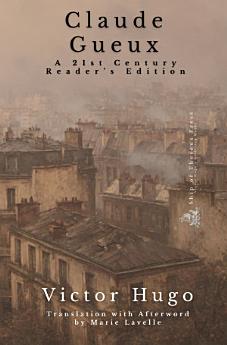
Claude Gueux
About this ebook
Hugo's fictionalized retelling closely follows the facts but adds depth and commentary, transforming a news item into a poignant cry for justice. At the time of its publication, the piece did not cause an immediate sensation, it was a modest publication compared to Hugo's grand novels, but retrospectively its weight looms large. In this compact story, we see the seeds of Les Misérables: a critique of how society treats its most vulnerable, an argument that ignorance and poverty breed tragedy, and a plea for compassion over vengeance. Modern readers and scholars have noted that Hugo, in Claude Gueux, was mainly sketching the outline of Jean Valjean and Inspector Javert years before he wrote their epic. In the final pages, Hugo switches from storytelling to a direct address, driving home the moral.
He points out that France spent large sums to punish Claude Gueux, but had spent nothing to educate or aid him. The famous line rings out: "Ouvrez une école, vous fermerez une prison", open a school and you close a prison. This pivot to essay forms the heart of Claude Gueux's philosophical and historical relevance. Hugo was writing at a time (the early July Monarchy) when the French prison system and the causes of crime were becoming subjects of public debate.