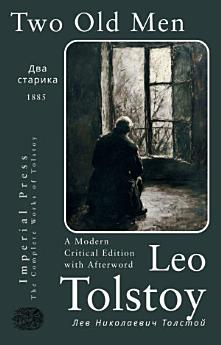
Two Old Men
About this ebook
Written during Lent of 1885 and printed the same year, later entering book form in the Posrednik series Stories for the People, the tale belongs to Tolstoy's didactic phase when he sought to translate Gospel precepts into everyday Russian scenarios; the plain diction, few characters, and direct moral aim suited the censorship climate, allowing the text to circulate without the obstructions that had haunted his more confrontational essays. Efim and Elisha, neighbours bound by a vow to visit the Holy Sepulchre, set out together, yet along the dusty road famine pushes Elisha into a starving household where he spends his pilgrimage alms rescuing children from death, while Efim presses on to the sacred sites, only to discover upon return that his companion's mercy has fulfilled the spirit of the vow better than any footprint on foreign soil; Tolstoy narrates this divergence with almost documentary restraint, letting gestures replace sermonising. The story's unsentimental equation of love with practical aid echoed with Russia's burgeoning charitable movements and later informed the ethical programme of Tolstoyan communes from England to South Africa; its structure also prefigured the story minimalism of Chekhov's mature stories, making it a pedagogical fixture in early Soviet classrooms where ideological censors judged its call for spontaneous service safe yet morally bracing.
This critical reader's edition presents a modern translation of the original manuscript, crafted for the modern reader with clean, modern language and simplified sentence structures that clarify his difficult Russian phrasing and specific antiquated references. Supplementary material enriches the text with autobiographical, historical, and linguistic setting, including an afterword by the translator on Tolstoy's personal history, impact, and intellectual legacy, an index of the philosophical concepts he employs, giving attention to Existentialism and influence by Schopenhauer, a complete chronological list of his published writings, and a detailed timeline of his life, showing the personal relationships that shaped his philosophy.