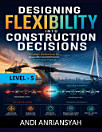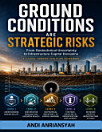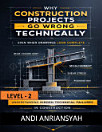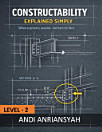
About this ebook
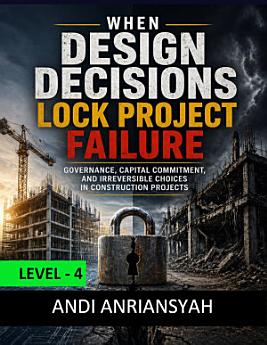
Drawing on years of technical experience at the interface between engineering reality and governance decision-making, this book argues that most project overruns are not execution failures — but the predictable consequence of early design decisions made under uncertainty and prematurely treated as resolved. Through a detailed analysis of FEED processes, alternatives evaluation, geotechnical assumptions, contract structures, and governance gate practices, the book exposes how capital is routinely committed to designs that cannot support it.
Rather than focusing on what goes wrong during construction, this work shifts attention to the critical first 15–20% of the project lifecycle — where decisions about alignment, technology, scope, and strategy progressively lock in outcomes that no amount of later management can reverse. It provides a structured framework for understanding design-driven capital risk, along with practical governance tools, diagnostic checklists, and decision questions that can be directly applied by capital committees, project sponsors, and independent reviewers.
Written for senior practitioners in infrastructure, energy, and resource sectors, this book offers a rare insider perspective on how governance systems actually function — and how they can be redesigned to prevent failure before it becomes inevitable.
Discover more
Ratings and reviews

- Flag inappropriate

- Flag inappropriate

- Flag inappropriate
About the author
Andi Anriansyah is a technical professional and infrastructure risk practitioner with over seventeen years of experience working at the intersection of engineering design, subsurface uncertainty, and capital decision-making in major projects. His work has focused on the critical interface where technical assumptions translate into irreversible commitments — a position that provides direct visibility into how early-stage decisions shape long-term project outcomes.
Throughout his career, he has contributed to complex infrastructure and resource projects, observing firsthand the recurring patterns by which governance systems commit capital to designs that are not yet sufficiently understood. This book reflects his effort to translate those observations into a structured framework for improving decision quality in capital-intensive environments, bridging the gap between technical knowledge and executive-level governance.