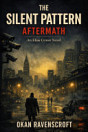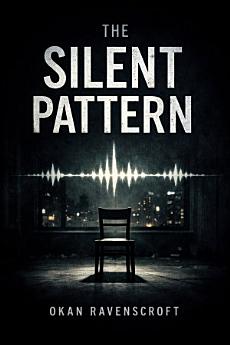
About this ebook
So when people begin disappearing without violence, without witnesses, and without obvious cause, the city barely notices.
Detective Elias Crowe does.
The first death looks like an anomaly. The second like coincidence. The third isn’t recorded as a crime at all. No shared weapon. No shared motive. No visible connection. Yet Crowe senses a structure beneath the chaos — a pattern that doesn’t repeat actions, but beliefs.
As the investigation unfolds, Crowe discovers that the killer isn’t interested in bodies. He is interested in consent. Through carefully designed “lessons,” ordinary citizens are taught when to speak, when to intervene, and when silence becomes a moral duty. Violence is not demanded — it is justified.
While the media reshapes tragedy into narrative and public opinion turns correction into virtue, Crowe is pushed out of the system meant to protect him. Stripped of authority, he is forced to confront a truth more dangerous than any weapon: once an idea takes hold, it no longer needs its creator.
When the killer finally steps out of the shadows with a personal invitation, Crowe realizes the pattern was never meant to stay hidden. It was meant to spread — and to lead him somewhere he has avoided for years.
Dark, cerebral, and psychologically relentless, The Silent Pattern explores how power operates without force, how control thrives without commands, and how easily a city learns to mistake silence for truth.
Some crimes leave evidence.
Others leave followers.
Discover more
Ratings and reviews
About the author
Okan Ravenscroft was born on September 9, 1988, in Istanbul, Turkey. He completed a four-year university education in Economics, a background that strongly influences his structured thinking and thematic depth as a writer.
With a brother who works as a film critic, Ravenscroft grew up immersed in cinematic storytelling, which is reflected in his vivid imagery and carefully constructed narrative pacing. His writing primarily explores crime, psychological tension, and moral ambiguity, often focusing on the intersections of media, justice, and personal conscience.
Married and the father of a six-year-old daughter, Ravenscroft believes that family life brings emotional depth and realism to his work. Through his stories, he aims to give voice to the unheard, challenge comfortable truths, and confront readers with unsettling yet essential questions about modern society.