About this ebook
The silence survived.
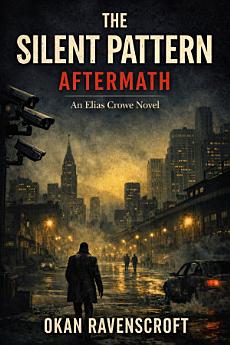
In The Silent Pattern: Aftermath, Elias Crowe discovers that naming a system is not the same as dismantling it.
After the events that forced institutions to acknowledge the weaponization of silence, the world appears calmer. Safer. More controlled. But beneath that surface, something has adapted. What was once covert is now refined. What was once experimental has become doctrine.
Across New York, harm no longer arrives as violence—it arrives as compliance. People disappear from influence, decisions are quietly rerouted, and deaths occur without resistance, without witnesses, without anyone technically at fault. Silence no longer hides wrongdoing. It justifies it.
As Crowe navigates a landscape where accountability has been redistributed into invisibility, he realizes the threat is no longer a system he can expose—but one that learns, recalibrates, and retaliates. Every intervention creates consequences. Every observation has a cost.
Joined by an unexpected ally who understands risk better than morality, Crowe is forced into a final reckoning: not whether the system is wrong, but whether stopping it requires becoming part of it.
Bleaker, sharper, and more psychologically unsettling than its predecessor, The Silent Pattern: Aftermath is a crime novel about institutional memory, moral attrition, and the danger of systems that never need to say “no.”
This is not a story about justice.
It is a story about what happens after the truth is told—and the silence decides to answer back.
Discover more
Ratings and reviews
About the author
Okan Ravenscroft was born on September 9, 1988, in Istanbul, Turkey. He completed a four-year university education in Economics, a background that strongly influences his structured thinking and thematic depth as a writer.
With a brother who works as a film critic, Ravenscroft grew up immersed in cinematic storytelling, which is reflected in his vivid imagery and carefully constructed narrative pacing. His writing primarily explores crime, psychological tension, and moral ambiguity, often focusing on the intersections of media, justice, and personal conscience.
Married and the father of a six-year-old daughter, Ravenscroft believes that family life brings emotional depth and realism to his work. Through his stories, he aims to give voice to the unheard, challenge comfortable truths, and confront readers with unsettling yet essential questions about modern society.