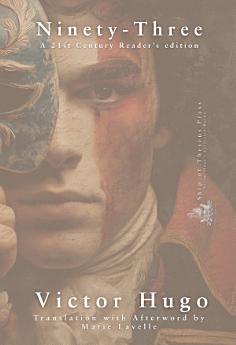
Ninety Three
About this ebook
To read Ninety Three is to witness a literary giant grappling with the eternal question of how to reconcile liberty, equality, and fraternity when the cannon smoke rolls in., Hugo leaves us not with an easy answer but with an image, a young idealist sacrificing himself on the altar of principle, and an old zealot realizing too late that principle without pity can destroy even what it seeks to save. This forceful conclusion ensures that Ninety Three, Hugo's final gift to literature, remains both a stirring historical epic and a poignant warning that echoes across the ages. Upon its publication, Quatrevingt treize (as the title reads in French) was met with great interest and respect.
Hugo had only recently returned to France after long years in exile; the Franco Prussian War and the Paris Commune (both in the early 1870s) had convulsed the nation, and readers understood that Hugo was now looking further back in history to shed light on those modern scars. He chose 1793, the year of the guillotine's frenzy, of the Vendée uprising, of the Republic fighting for its life, as a mirror to study the cycle of violence and idealism that France seemed destined to repeat.