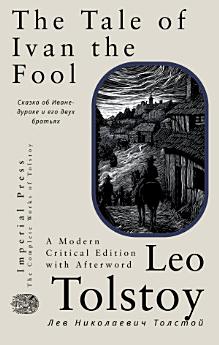
The Tale of Ivan the Fool
درباره این ای-کتاب
Tolstoy drafted the tale in early 1885 while supervising educational experiments at Yasnaya Polyana, then inserted it the following year into his pedagogical anthology The Four Stories, printed by Posrednik in Moscow on cheap paper intended for rural readers; the text appeared in both the new orthography and a special syllabic font devised to ease village literacy, showing that the author viewed the story less as literary ornament than as practical moral instruction. The story pits three brothers, Simon the soldier, Taras the merchant, and the guileless Ivan, against a devil who schemes to ruin their souls, yet every stratagem of violence or profit rebounds in misfortune, while Ivan's cheerful mending, sharing, and forgiveness confound both fiend and worldly siblings; Tolstoy spices the folk idiom with sly anachronisms, weaving in references to railroads, artillery, and international credit to underline the absurdity of modern power when set against the quiet rhythm of subsistence farming. Immediately reprinted in children's primers across the Empire and swiftly translated into Polish, German, and English, the story served pacifist sects such as the Doukhobors as a doctrinal touchstone, later influencing Gandhi's concept of swadeshi simplicity; scholars of genre prize the piece for its rare fusion of oral tradition and philosophical satire, while stylisticians note that its clipped repetitions and folk refrains offered early evidence of a modernist interest in non linear temporality long before Joyce and Woolf made the device fashionable.
This critical reader's edition presents a modern translation of the original manuscript, crafted for the modern reader with clean, modern language and simplified sentence structures that clarify his difficult Russian phrasing and specific antiquated references. Supplementary material enriches the text with autobiographical, historical, and linguistic setting, including an afterword by the translator on Tolstoy's personal history, impact, and intellectual legacy, an index of the philosophical concepts he employs, giving attention to Existentialism and influence by Schopenhauer, a complete chronological list of his published writings, and a detailed timeline of his life, showing the personal relationships that shaped his philosophy.