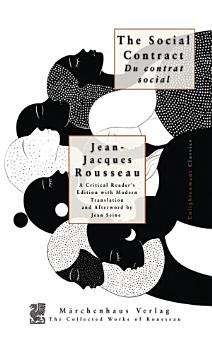
The Social Contract: A New Reader's Edition
About this ebook
Released in 1762, On the Social Contract was immediately banned in France and Geneva for its incendiary challenge to the established order. Authorities were alarmed by Rousseau's insistence that legitimate political authority comes only from a social agreement among free citizens rather than from divine right or tradition. The book nonetheless spread across Europe in clandestine editions and would become an early text for revolutionaries in France and beyond, who drew on its vision of popular sovereignty as they reimagined the principles of government.
Composed in a brisk, aphoristic style, On the Social Contract; or, Principles of Political Right was published in 1762 under a pseudonymous Dutch imprint to evade censorship. It opens with one of Rousseau's most famous declarations, "Man is born free, and everywhere he is in chains", capturing the idea that modern society has unjustly shackled human liberty. In the chapters that follow, Rousseau sketches how a truly just society could form itself through a social pact. Each person, he argues, must give up their natural freedom to the community as a whole, and in exchange all members receive the protection of laws that express the collective interest. The key to this arrangement is the general will, Rousseau's term for the unified common interest of the people, which alone can be sovereign. Government ministers or rulers, in his view, are merely delegates tasked with carrying out this general will, sovereignty itself always remains with the people.
Despite its brevity, The Social Contract (as it is commonly known) became one of the most influential political works of the Enlightenment. It boldly repudiated the longstanding doctrine that monarchs ruled by divine sanction, instead placing ultimate authority in the hands of the governed. Such ideas were extraordinarily radical for 1762, they forced Rousseau to flee into exile at the time, yet within a few decades they would inspire democratic revolutions. Generations of thinkers and revolutionaries have returned to Rousseau's vision of the social contract and the general will as foundations for modern democracy, civic equality, and the belief that citizens have the right to shape their own destiny.