About this ebook
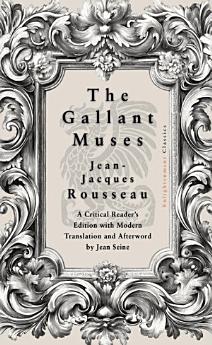
Scholarly supporting material accompanies the translation of The Gallant Muses. Alongside The Gallant Muses, the volume provides an afterword tracing Rousseau's intellectual relationship with Diderot, Voltaire and his reception by Nietzsche, revealing the detailed dialogue between the period's most influential minds. To frame The Gallant Muses, the edition provides a timeline that connects the major events of Rousseau's life with world events, a glossary of Enlightenment terminology frames Rousseau's debates in the intellectual milieu of his day, and a detailed index provides an guide to his complete writings.
"Les Muses galantes" is one of Rousseau's earliest and most ambitious musical compositions, marking his first foray into operatic theater. This production shows Rousseau's talents as a composer and librettist, showing his engagement with eighteenth century French artistic culture. Following the popular French theatrical convention of the time, the work's format as an opera ballet combines dramatic story with elaborate dance sequences and musical interludes. Despite being composed in 1743, the work gained public attention through several notable performances that established Rousseau's reputation in Parisian musical circles.
The opera's reception history illustrates Rousseau's difficult relationship with the established musical hierarchy of his era. It was performed several times with considerable success: in 1745, before the Duke of Richelieu, who intended it for the court; in 1747, at the Opéra Théâtre; and in 1761, before the Prince of Conti. These performances positioned Rousseau within the prestigious circles of French aristocratic patronage and demonstrated his ability to compose works suitable for the highest levels of society. yet, the work also generated notable professional conflict, especially with the prominent composer Jean Philippe Rameau. Rameau developed a lasting animosity toward Rousseau after hearing excerpts performed at La Pouplinière's residence. This conflict foreshadowed the broader intellectual and artistic disputes that would characterize Rousseau's later career, revealing how his musical ambitions intersected with the competitive and often contentious world of Enlightenment cultural politics.