What is My Faith?
About this ebook
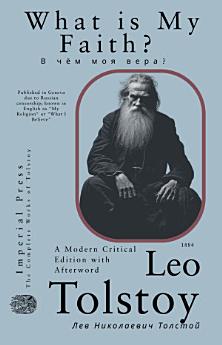
Published in Geneva by the same free thinking circle in late 1884, the book was promptly banned in the Russian Empire, its import thwarted at the frontier, for Tolstoy aimed straight at the nexus of state power and ecclesiastical dogma, accusing both of betraying the Sermon on the Mount. The treatise advances a literal reading of Christ's ethical injunctions, arguing that Christian truth requires absolute renunciation of violence, oath taking, and property; in place of theology Tolstoy offers a painstaking commentary on Gospel passages that converges on a form of Christian anarchism, a term his readers later supplied. By fusing spiritual rigor with social critique, the book redirected Russian intelligentsia away from Marxist militancy toward ethical pacifism, influenced the Doukhobors in their emigration to Canada, and furnished moral ammunition for pacifist movements across Europe, all while foreshadowing the concise biblical harmony that would become "The Gospel in Brief."
This critical reader's edition presents a modern translation of the original manuscript, crafted for the modern reader with clean, modern language and simplified sentence structures that clarify his difficult Russian phrasing and specific antiquated references. Supplementary material enriches the text with autobiographical, historical, and linguistic setting, including an afterword by the translator on Tolstoy's personal history, impact, and intellectual legacy, an index of the philosophical concepts he employs, giving attention to Existentialism and influence by Schopenhauer, a complete chronological list of his published writings, and a detailed timeline of his life, showing the personal relationships that shaped his philosophy.