The King's Own: Top English Novelist
About this ebook
However boldly their warm blood was spilt,
Their life was shame, their epitaph was guilt;
And this they knew and felt, at least the one,
The leader of the hand he had undone—
Who, born for better things, had madly set
His life upon a cast, which linger’d yet.
Byron.
There is perhaps no event in the annals of our history which excited more alarm at the time of its occurrence, or has since been the subject of more general interest, than the Mutiny at the Nore, in the year 1797. Forty thousand men, to whom the nation looked for defence from its surrounding enemies, and in steadfast reliance upon whose bravery it lay down every night in tranquillity,—men who had dared everything for their king and country, and in whose breasts patriotism, although suppressed for the time, could never be extinguished,—irritated by ungrateful neglect on the one hand, and by seditious advisers on the other, turned the guns which they had so often manned in defence of the English flag against their own countrymen and their own home, and, with all the acrimony of feeling ever attending family quarrels, seemed determined to sacrifice the nation and themselves, rather than listen to the dictates of reason and of conscience.
Discover more
About the author
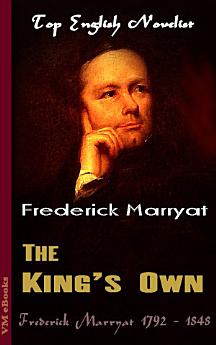
Captain Frederick Marryat (10 July 1792 – 9 August 1848) was a British Royal Navy officer, novelist, and an acquaintance of Charles Dickens, noted today as an early pioneer of the sea story. He is now known particularly for the semi-autobiographical novel Mr Midshipman Easy and his children's novel The Children of the New Forest, and for a widely used system of maritime flag signalling, known as Marryat's Code.
Marryat was born in London, the son of Joseph Marryat, a "merchant prince" and member of Parliament, and his American wife Charlotte, née von Geyer. After trying to run away to sea several times, Marryat was permitted to enter the Royal Navy in 1806 as a midshipman on board HMS Imperieuse, a frigate commanded by Lord Cochrane (who would later serve as inspiration for both Marryat and other authors).
Marryat's time aboard the Imperieuse included action off the Gironde, the rescue of a fellow midshipman who had fallen overboard, captures of many ships off the Mediterranean coast of Spain, and the capture of the castle of Montgat. When the Imperieuse shifted to operations in the Scheldt, in 1809, Marryat contracted malaria, and returned to England on the 74-gun HMS Victorious.
From 1832 to 1835 Marryat edited The Metropolitan Magazine. He kept producing novels, his biggest success coming with Mr Midshipman Easy in 1836. He lived in Brussels for a year, travelled in Canada and the United States, then moved to London in 1839, where he was in the literary circle of Charles Dickens and others. He was in North America in 1837 when the Rebellion of that year in Lower Canada broke out, and served with the British forces in suppressing it.
Marryat was named a Fellow of the Royal Society in recognition of his invention and other achievements. In 1843 he moved to a small farm at Manor Cottage in Norfolk, where he died in 1848. His daughter Florence Marryat later became well known as a writer and actress. His son Francis Samuel Marryat completed his late novel The Little Savage.
Marryat's novels are characteristic of their time, with concerns of family connections and social status often overshadowing the naval action, but they are interesting as fictional renditions of the author's 25 years' of experience at sea. Much admired by men like Mark Twain, Joseph Conrad and Ernest Hemingway, they were among the first sea novels, serving as models for later works by C. S. Forester and Patrick O'Brian also set in the time of Nelson and telling of young men rising through the ranks through successes as naval officers. Along with his novels, Marryat was also known for his short writings on nautical subjects. These short stories, plays, pieces of travel journalism and essays appeared in The Metropolitan Magazine too, and were later published in book form as Olla Podrida. Marryat's 1839 Gothic novel The Phantom Ship contained The White Wolf of the Hartz Mountains, which includes the first female werewolf in a short story.
In the same year, 1839, Marryat published his Diary in America, a travelogue that reflects his criticisms of American culture and society. The book and the author were both subject to acts of violence, including the burning of the book and of Marryat's effigy in public.