About this ebook
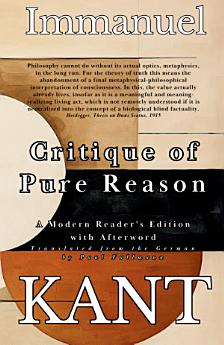
The Critique of Pure Reason undertakes a study of reason itself, articulating Kant's radical idea that the mind actively shapes experience rather than passively receiving information. Kant distinguishes between phenomena (the world as humans perceive and experience it) and noumena (things in themselves, which remain unknowable), arguing that human knowledge is by nature limited to the realm of possible experience. By introducing basic concepts such as the categories of understanding, transcendental idealism, and the antinomies of pure reason, Kant attempts to reconcile science, morality, and freedom within coherent boundaries, thus establishing both the power and the constraints of reason.
The second edition substantially revised key sections including the prefaces, introduction, Transcendental Aesthetic, Transcendental Deduction, and the chapter on Phenomena and Noumena, adding the famous "Refutation of Idealism" to counter criticisms that his transcendental idealism denied the reality of external objects.