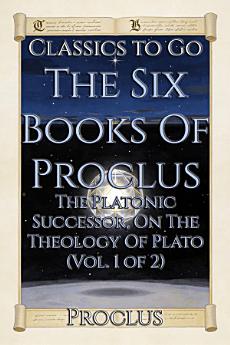
About this ebook
Discover more
About the author
Proclus, who lived from 412 to 485 CE, was one of the great late antique philosophers and the last major head of the Platonic school in Athens. Born in Constantinople and educated in Alexandria and Athens, he became known for his extraordinary discipline, intellectual range, and devotion to philosophy as a way of life. As a teacher, commentator, and system-builder, he helped preserve and transform the Platonic tradition at a time when the ancient world was changing rapidly. His writings range across metaphysics, theology, ethics, mathematics, and astronomy, and they reveal a mind determined to show the unity of all knowledge beneath the surface of many disciplines. Proclus is especially admired for his elaborate philosophical vision of a structured universe in which all things flow from a single divine source and return to it through ordered levels of reality. Central to his thought are themes of harmony, causation, the soul's ascent, and the relation between reason and transcendence, ideas that continue to speak to modern readers interested in spirituality, philosophy, and the search for meaning in a fragmented world. His legacy lies not only in his influence on later Neoplatonism, medieval thought, and Renaissance philosophy, but also in his example of rigorous intellectual ambition joined to deep metaphysical seriousness. Readers who enjoy dense but rewarding philosophy, the history of ideas, or reflections on the connection between the cosmos and the human soul will find Proclus especially compelling.