About this ebook
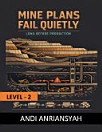
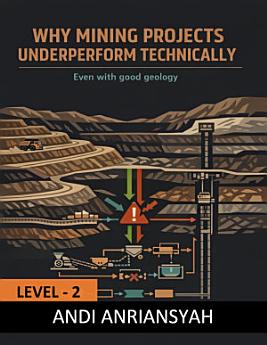
Across the mining industry, projects consistently deliver 20–35% less metal than projected. The usual explanation points to geological complexity. But what if geology is not the real problem?
This book introduces a different perspective:
systematic translation failure—the breakdown in how geological knowledge is converted into operational reality.
Drawing on observations from more than 150 mining operations, the book shows how value is lost at critical interfaces:
Resource models that fail to represent mining-scale reality
Dilution mechanisms that exceed assumptions and compound over time
Processing systems that struggle with real ore variability
Financial optimization that undermines technical stability
Individually, these issues seem manageable. Together, they make underperformance almost inevitable.
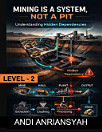
More importantly, this book goes beyond diagnosis. It presents a practical perspective on mining systems integration—aligning geology, mine planning, and processing into a coherent system to improve performance and reduce risk.
This is not a procedural manual.
It is not a textbook.
It is a framework for understanding—and improving—mining project performance.
Who should read this book:
Mining executives and decision-makers
Resource geologists and mine planners
Metallurgists and operations leaders
Investors, lenders, and project evaluators
Engineers seeking system-level understanding
If you have ever asked:
“Why did a technically sound project still underperform?”
This book offers a clear and structured answer.
Discover more
About the author
Andi Anriansyah is a senior technical professional with experience across oil & gas, mining, and infrastructure projects, with a focus on subsurface evaluation, resource development, and project environments.
His work involves supporting technical decision-making under uncertainty, contributing to multidisciplinary discussions on development planning, execution strategies, and risk considerations across project lifecycles.
Drawing on experience from multiple operations and industry contexts, he examines why technically sound projects often underperform in practice. His approach focuses on understanding how value is affected by the integration—or misalignment—between geology, mine planning, and processing systems.
His observations are informed by analysis of operational data, reconciliation outcomes, and discussions with practitioners across the industry.
He is particularly interested in mining systems integration as a way to improve project performance and reduce risk in complex resource developments.