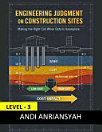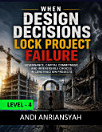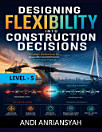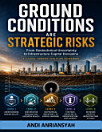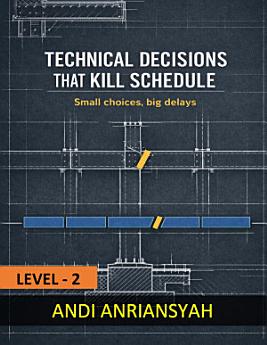
About this ebook
Why do delays appear suddenly—when everything seemed under control just weeks before?
This book challenges one of the most persistent misconceptions in engineering and construction:
Schedule delay is not an event. It is an accumulation.
Drawing from over seventeen years of technical involvement in complex projects across energy, infrastructure, and construction, Andi Anriansyah presents a structural analysis of how seemingly minor technical decisions—made rationally, under pressure, and often with the best intentions—gradually erode the integrity of project schedules.
This is not a book about planning tools, scheduling software, or recovery techniques.
It is about something far more fundamental:
the hidden mechanics of decision-making that quietly determine whether a schedule will hold—or collapse.
Inside, you will discover:
Why technically competent teams are often the most vulnerable to schedule failure
The concept of micro-decisions and how they accumulate into major delays
The four structural mechanisms that degrade schedule integrity
How design deferrals, procurement changes, and interface assumptions silently reshape critical paths
Why project dashboards often fail to reveal the real condition of a project
How to read schedule failure backwards—and detect it before it becomes visible
Each chapter dissects a specific type of technical decision commonly found in EPC and construction environments, revealing how local rational choices create system-level consequences over time.
Designed for:
Project engineers and technical leads
Construction and EPC professionals
Planning and scheduling engineers
Project managers and senior decision-makers
This book is not about assigning blame.
It is about building structural awareness.
Because in complex projects, delays do not begin when they are reported—
they begin when decisions are made.
Discover more
About the author
Andi Anriansyah is a senior technical professional with over 17 years of experience across oil and gas, mining, and infrastructure projects. His work spans subsurface evaluation, resource development, and technical support within complex project environments, where decisions are made under uncertainty and across multiple disciplines.
Throughout his career, Andi has contributed to a wide range of projects—from field development and reserves evaluation in upstream oil and gas, to geotechnical and geological support in large-scale construction and hydropower projects. His experience includes working within operator environments, multidisciplinary project teams, and government-related technical settings.
Rather than operating from a single disciplinary perspective, he has consistently worked at the intersection of subsurface understanding and project execution—supporting technical decisions that carry implications for planning, sequencing, and operational risk.
This positioning—close to decisions, but not always the primary decision-maker—has provided a unique vantage point: the ability to observe how technically sound decisions, when viewed in isolation, can collectively shape the structural outcomes of complex projects over time.
The ideas presented in this book are drawn from that perspective.