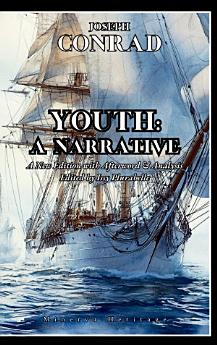
Youth: A Narrative: A New Reader's Edition
About this ebook
In this edition, Youth: A Narrative appears with an afterword, extensive reference materials including a timeline of Conrad's life and works, character glossary and group discussion questions on this literary classic. The text of Youth: A Narrative receives light editorial modernization, chiefly to remove archaic terminology that can impede modern readers.
The story dissects the paradox of nostalgia: how failure and suffering crystallize into myth when filtered through memory. Young Marlow's ordeal aboard the Judea, a "venerable" ship held together by rust and hope, is a litany of disasters, yet decades later, he recalls it as his "greatest adventure." Conrad isn't just romanticizing youth; he's exposing the mechanics of self mythology. The voyage's futility (the ship's cargo, coal, literally fuels its own destruction) becomes a metaphor for youth itself, a combustion of energy spent chasing illusions. The older Marlow's audience, middle aged men murmuring in the shadows, serve as a chorus of disenchanted adulthood, their silent recognition showing the story's central irony: that the glory lies not in achievement, but in the act of striving. The East, when finally glimpsed, is less a destination than a mirage, its shores smelling of "vegetation and rot," a reminder that all quests end in ambiguity. Conrad's prose swerves between the comic absurdity of the crew's persistence and the haunting beauty of the sinking ship, a "flaming wreck" against the night, as ephemeral as youth's fervor. The tale's power lies in its refusal to resolve whether Marlow's nostalgia is a lie or a necessary fiction. Is the "glow" of youth a truth or a trick of the light? Conrad lets the question hang, like smoke after the Judea's final fire, felt but never grasped.