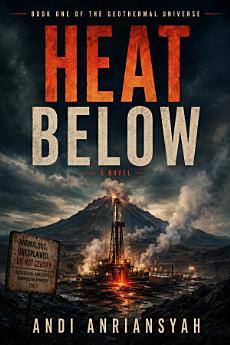
Over dit e-boek
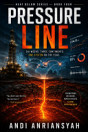
Nineteen years into a career built on reading the ground honestly, Rani has learned that “anomalous” is usually just a word for a problem someone else will inherit. But as pressure mounts to greenlight drilling ahead of schedule, and the numbers keep refusing to behave, she and mentor Elias Hartmann uncover a signature in the rock that has no place being there — and no explanation that doesn't reopen a decades-old file marked Do Not Certify.
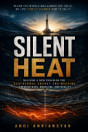
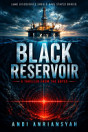
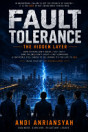
Heat Below is Book One of the Heat Below Series (Geothermal Universe): a hard-science technothriller for readers who loved the meticulous unraveling of Michael Crichton's best work and the slow-building institutional dread of HBO's Chernobyl. Grounded in real subsurface geology and geothermal engineering by a 17-year industry veteran, it's the story of how a single honest reading becomes the first thread in something much larger — and the opening chapter of a seven-book series that spans the globe.
Meer ontdekken
Beoordelingen en reviews
Over de auteur
Andi Anriansyah is a senior technical professional with more than seventeen years of experience across oil & gas, mining, and infrastructure projects in Indonesia and abroad. A graduate of the Geological Engineering program at Institut Teknologi Bandung, Andi has worked as a geologist and petrophysicist on oil and gas fields across South Sumatra, the NE and NW Java basins, the Salawati and Bintuni basins in Papua, and on subsurface evaluations as far afield as the Tsimiroro field in Madagascar — alongside geotechnical work on the Batang Toru Hydroelectric Power Plant in North Sumatra and nickel exploration in Halmahera.
That career, spent largely in the unglamorous, exacting work of subsurface evaluation, resource development, and risk assessment under uncertainty, is the foundation Heat Below is built on. Andi is a member of several professional geological and engineering societies, and continues to provide independent technical decision support to oil and gas projects.
Heat Below is Andi Anriansyah's debut novel and the first book of the planned seven-book Geothermal Universe series — an attempt to bring the same grounded, data-driven tension of a real subsurface investigation to a readership that has never had to sit with a resistivity model at four in the morning, wondering if the number in front of them is about to change someone's life.