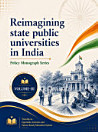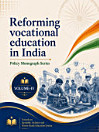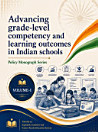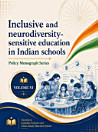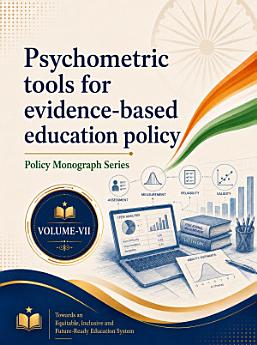
Psychometric tools for evidence-based education policy: A policy framework for scale development, learning assessment, student support indicators, programme evaluation, and data-based reform
About this ebook
Author: Dr. Harshvardhan Singh
Series: Education for Viksit Bharat 2047: Policy Monograph Series, Volume VII
Publisher: Scholars Choice Press, Educators Plus
Place of Publication: New Delhi, India
Year of Publication: 2026
Edition: First Edition
ISBN: 978-81-686513-6-4
Copyright © 2026 Dr. Harshvardhan Singh. All rights reserved.
No part of this publication may be reproduced, stored in a retrieval system, transmitted, distributed, or used in any form or by any means—electronic, mechanical, photocopying, recording, scanning, digital storage, artificial intelligence training datasets, or otherwise—without prior written permission from the author and publisher, except for brief quotations used for academic review, research, teaching, policy discussion, or scholarly citation with proper acknowledgement.
Disclaimer
This policy monograph is an independent academic and policy-oriented work intended for education policymakers, State Education Departments, SCERTs, DIETs, assessment bodies, universities, teacher education institutions, NGOs, school leaders, programme evaluators, and education researchers. The views, frameworks, recommendations, and interpretations presented in this book are those of the author and do not represent the official position of any government department, statutory body, assessment agency, university, or funding institution unless explicitly stated.
The monograph is designed for policy analysis, institutional planning, capacity building, and educational improvement. It does not provide legal, clinical, psychological diagnostic, or statutory assessment advice. Any psychometric tool, checklist, assessment framework, or evaluation model discussed in this book should be adapted, validated, and ethically reviewed before use in formal decision-making, student assessment, teacher evaluation, programme evaluation, or policy implementation.
Every effort has been made to ensure accuracy, originality, and responsible use of policy concepts and technical terminology. However, readers are advised to consult official policy documents, statutory guidelines, assessment standards, and institutional protocols before making administrative or legal decisions.
Suggested Citation
Singh, H. (2026). Using psychometric tools for evidence-based education policy: A policy framework for scale development, learning assessment, student support indicators, programme evaluation, and data-based reform. Educators Plus.
Ratings and reviews
About the author
Dr. Harshvardhan Singh is an education researcher, psychometrician, and curriculum-evaluation professional working in the areas of educational measurement, research tool development, learning assessment, teacher education, inclusive education, digital readiness, student support systems, and policy-relevant educational research. His work focuses on evidence-based reform, psychometric scale construction, learner diversity, educational assessment, teacher capacity, and data-informed education improvement.
His academic and professional interests include the development and validation of educational and psychological tools, competency-based assessment, teacher effectiveness measurement, inclusive education indicators, student support systems, digital readiness frameworks, and programme evaluation for school and higher education. He has contributed to policy-oriented writing, research tool construction, curriculum evaluation, and educational reform discussions with a particular focus on improving the quality, equity, and accountability of Indian education.
Dr. Singh’s work is guided by the belief that educational reform becomes meaningful only when policy intentions are supported by valid evidence, ethical measurement, and practical implementation systems. He emphasises that data should not be collected merely for reporting or compliance; it should be used to understand learners, support teachers, strengthen institutions, improve programmes, and build more inclusive and responsive education systems.
Through the Education for Viksit Bharat 2047: Policy Monograph Series, he seeks to contribute practical, evidence-based, and implementation-oriented frameworks for policymakers, education departments, universities, SCERTs, DIETs, schools, NGOs, researchers, and educational leaders committed to national educational transformation.