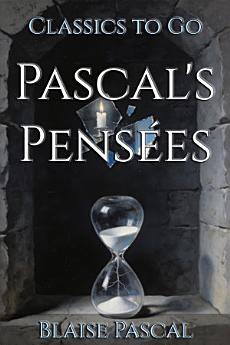
Pascal's Pensées: Restored Classics to Go Edition
About this ebook
Discover more
About the author
Blaise Pascal was a brilliant French thinker, mathematician, physicist, and writer born in 1623, whose short life ended at just thirty-nine but whose influence has lasted for centuries. A prodigy from childhood, he made major contributions to mathematics and science before turning increasingly toward questions of faith, human nature, and the limits of reason. His literary and philosophical reputation rests on a body of reflections that are sharp, searching, and deeply humane, blending intellectual rigor with spiritual urgency. Across his writing, Pascal explores the fragility of human beings, the restless search for meaning, the tension between pride and humility, and the difficulty of living wisely in a world of uncertainty. Those concerns remain strikingly modern, speaking to readers who wrestle with doubt, ambition, anxiety, and the desire for purpose. Pascal's enduring significance lies in his ability to unite scientific brilliance with profound moral and religious insight, making him a rare figure who still feels both historically important and personally immediate. Today, he continues to resonate with readers interested in philosophy, theology, psychology, and the inner life, especially those drawn to concise but powerful reflections on what it means to be human.