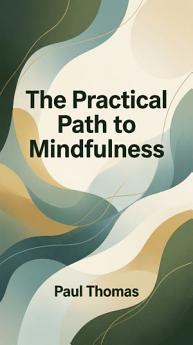
The Practical Path to Mindfulness
About this ebook
While many approach gardening as a hobby or a practical task, this book invites you to experience it as a daily practice of mindfulness deeply rooted in both language and lifestyle. The garden, the home, and the living green world become not only the backdrop for our daily lives but also the context in which language blossoms, evolves, and gains new meaning. As we cultivate our gardens and nurture our homes, we simultaneously nurture our inner lives and, if we wish, expand our vocabulary across languages.
This book, The Practical Path to Mindfulness, guides English and Malay language learners—and all curious readers—through an intentional journey where the vocabulary of gardening, home, and plant life is both the subject and the setting for mindful growth. Every chapter blends practical linguistic learning with reflective insights, giving you the words to describe the beauty, challenges, and rewards of tending to nature and the home. Along the way, you will learn not merely new words, but new ways of seeing, understanding, and participating in the intricate dance of daily life.
Gardening: A Landscape for Mindful Living
The act of gardening is inherently mindful. Every seed sown, every handful of soil turned, demands presence—each is an invitation to slow down and focus on a single action. The garden’s rhythm calls us to attend to changing seasons, observe growth and decay without judgment, and celebrate each small triumph. There is patience in waiting for seedlings to emerge, humility in facing unpredictable weather, and acceptance in tending to what is, rather than what we wish might be.
Historically, gardens are not only sources of food and beauty but also spaces of healing and contemplation. Across Malaysia and much of the English-speaking world, gardens range from the tropical splendor of kampung compounds to neat suburban yards, from rooftop herb boxes to urban community orchards. Each space possesses its own vocabulary—words that bring specificity to the world of plants, tools, techniques, and environments, anchoring the language in daily experience.
Learning this vocabulary in both English and Malay honors the cultural exchange that naturally flows through the world of gardening. This bilingual exploration deepens our sense of connection—not only to the soil and the plants but to the broader communities around us. Whether you are a lifelong gardener or a beginner planting your first seed, this path through vocabulary and mindfulness is open to you.
Home: The Heart Where Mindfulness Begins
The home is far more than shelter; it is the center of personal life, a sanctuary, and a reflection of the self. A mindful home is neither cluttered nor sterile but is sustained by attentiveness and care. Each room, each routine, and every object tell a story and offer the opportunity for presence—quiet moments of noticing, appreciating, and intentionally shaping space.
As you read, you will encounter vocabulary that describes every corner of the home, in both English and Malay, along with the language that relates to order, beauty, and comfort. You will learn not just the words, but the associated feelings, habits, and values that these words embody. Whether you are naming the parts of a house, the varieties of plants on your windowsill, or the materials of a handcrafted chair, language allows you to express care for your living spaces—and to communicate this care across different cultures and languages.
Nature and Plants: Expanding the Vocabulary of Life
If the garden is the classroom, nature is the broader curriculum. The world of plants is rich with diversity and wonder, and each species, process, and characteristic offers a new word, a new way of seeing. The Malay and English languages both contain deep botanical roots—words for leaf, root, flower, fruit, and seed, as well as for rain, sun, and soil. Beyond the basics, the vocabulary branches into the specialized: trellis and compost, pruning and propagation, resilience and renewal.
Learning to name the plants around you, in multiple languages, is an exercise in observation and respect. The process of putting words to what you notice sharpens your attunement and heightens your appreciation. Language empowers you not only to describe what you see, but also to recognize medical uses, culinary properties, aesthetic qualities, and folkloric significance. From majestic rainforest trees to tiny houseplants, the language of plants becomes the language of attentiveness itself.
Why Mindfulness Matters in Language Learning
To learn a language requires more than memorizing lists of words and rules. True mastery is about experiencing, feeling, and using language in context. Mindfulness, as both a practice and a perspective, integrates awareness with intention, stillness with curiosity. When you pair vocabulary learning with mindful gardening or homemaking, the words become living tools—applied, anchored, and memorable.
This book encourages reflective practices: pause to observe a sprouting seed or the way sunlight enters a room, then find the exact word—first in English, then in Malay—that captures the moment. Through repeated observation, gentle correction, and real engagement, vocabulary ceases to be abstract data and becomes your own.
You will also be guided to notice linguistic differences, false friends, idiomatic expressions, and common mistakes—those subtle, mindless errors that can creep in when we do not pay attention. Through mindfulness, these mistakes become opportunities for deeper learning rather than sources of discouragement.
The Bilingual Journey: English and Malay Side by Side
Malaysia’s multilingual heritage enriches the daily life of its people, making the blend of English and Malay more than a theoretical exercise. In this book, every major concept and vocabulary item comes with its Malay equivalent or translation, along with commentary on meaning, usage, and pronunciation.
Key vocabulary is presented in clear, accessible formats. Example sentences place the words in relevant, lived contexts—whether planting a tree, sweeping a floor, or welcoming a guest into your home. Linguistic insights highlight subtle differences: how certain plant names may differ from region to region, or how the meaning of a word shifts depending on whether it is used at home or in the garden. Occasional pronunciation guides demystify unfamiliar sounds, using common phonetic conventions.
This approach does not treat language learning as a separate, isolated activity. Rather, it is woven directly into life, accompanying every act of nurturing a plant, organizing a room, or admiring a sunset. In doing so, it fulfills language’s oldest purpose: to give meaning to what matters most about being alive, attentive, and connected.
Practical and Reflective—A Book to Use and to Inspire
Each chapter in The Practical Path to Mindfulness delivers specific, tangible learning outcomes. You will find focused explorations of gardening tools, types of homes, plant families, and seasonal routines, while acquiring a robust working vocabulary relevant to everyday experiences.
But the chapters also encourage you to pause, reflect, and apply what you have learned. Brief exercises, mindfulness strategies, and practical suggestions turn language acquisition into a process of personal growth. Through English and Malay, the words you learn become stepping stones toward greater calm, improved focus, and richer self-expression.
Whether you are a formal student, a self-driven learner, a teacher, or simply a lover of meaningful language and mindful living, this book equips you to thrive—with words as your companions and guides.
Embarking on the Practical Path
Your journey through this book is not a race, nor is it a checklist to be completed. It is a path, walked step by mindful step, in which both language and attention deepen over time. Return to each chapter as often as needed, revisit words, practice pronunciation, and allow the rhythms of gardening, homemaking, and nature to shape your understanding.
As you begin, let curiosity be your guide and mindfulness your constant companion. May the lessons you learn here enrich not only your knowledge of English and Malay, but your capacity to see, hear, and engage with the living world—both outside and within your home.
Let the garden gate swing open. Let the journey begin.
Ratings and reviews
About the author
I am Paul Thomas, an author who explores personal growth through the intersection of reflection, motivation, and intentional daily practice. My writing is centered on the idea that progress does not always come from dramatic change, but from learning to notice what matters, question what no longer serves us, and make small decisions with greater purpose. I use journaling as a practical tool for helping readers organize their thoughts, uncover new possibilities, and stay connected to the person they want to become. Through reflective prompts and encouraging guidance, my books aim to support readers in building clarity, strengthening perseverance, and creating a more focused, meaningful, and self-directed life.