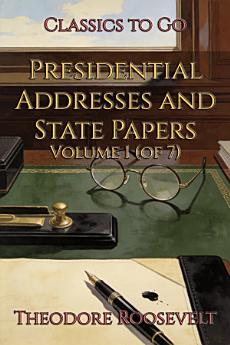
Presidential Addresses and State Papers: Restored Classics to Go Edition
About this ebook
About the author
Theodore Roosevelt was born in New York City in 1858 and rose from a frail, asthmatic child to one of the most energetic and influential figures in American public life. Educated at Harvard, he moved with unusual speed through a life of public service, becoming a state legislator, reform-minded police commissioner, assistant secretary of the navy, governor, vice president, and then president after the assassination of William McKinley. He also served as a soldier, naturalist, explorer, and historian, embodying a restless curiosity that shaped both his politics and his writing. As an author, Roosevelt was remarkably prolific, producing speeches, essays, histories, memoirs, and public papers that reveal his conviction that character, duty, and action should be inseparable. His writing is marked by vigor, moral seriousness, and a belief in national purpose, and it helped define the voice of a modernizing America. Central themes in his work include leadership, civic responsibility, conservation, reform, and the balance between individual strength and the common good, all of which remain strikingly relevant in an age still wrestling with political division, environmental stewardship, and public trust. Roosevelt's legacy endures not only because he shaped the presidency, but because he wrote as someone who believed ideas should serve the public life. Readers interested in American history, leadership, reform, and forceful prose will find him especially rewarding.