Timaeus

· Prabhat Prakashan
Ebook
185
Pages
Tools

About this ebook

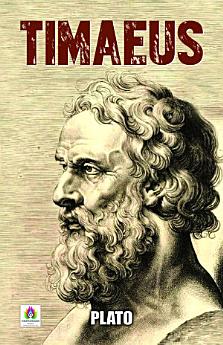
Timaeus by Plato is an extraordinary philosophical dialogue that delves deep into the very foundations of existence, nature, and the cosmos. In this captivating work, Plato presents a complex narrative that intertwines cosmology, ethics, and metaphysics, inviting readers to explore his visionary theories about the universe and the ultimate reality that governs it. Central to this dialogue is Timaeus, a Pythagorean philosopher, who explores the cosmos, presenting a compelling account of the creation and the structure of the world we inhabit.

In the opening passages, Timaeus articulates a vision of the universe grounded in the principles of mathematical harmony and order. Plato’s philosophical musings guide us through a profound understanding of how the universe is not a mere collection of chaotic elements but rather an intricately designed entity, forged by a divine creator. The dialogues probe the relationship between the ideal forms and the material world, demonstrating Plato’s theory of forms, which posits that true knowledge can only be attained through abstraction from the physical realm. Timaeus’ narrative emphasizes the importance of understanding the philosophy of nature, as it lays the groundwork for how we perceive reality itself.

As the text unfolds, readers are taken on a journey that examines the nature of the soul, the interplay between the body and mind, and the ethical implications of human existence. Plato posits that everything in nature, including mankind, is connected and bound by the same universal principles that dictate existence. This idea is not simply a philosophical conjecture but a deeply rooted belief that resonates throughout the entire dialogue. Bursting with insights on ethics and politics, Timaeus serves as an essential component in understanding Plato's broader philosophical project.

Plato’s dialogue format allows for a rich exploration of ideas as he employs the Socratic method—engaging in discourse that challenges readers to reflect on their own beliefs and understanding. The dialogue unfolds in a dynamic interaction that encourages not only comprehension but also active participation in the philosophical inquiry. As Timaeus speaks, both Socrates and the audience assess his claims, fostering an environment of intellectual rigor that elevates the reader’s engagement with the text.

The implications of Timaeus extend well beyond its time, influencing generations of thinkers, scientists, and scholars. Plato’s exploration of the cosmos serves as a foundational text in the study of natural philosophy, and the ideas presented have echoes in the development of metaphysics throughout Western thought. The intricate relationships between mathematics, nature, ethics, and the ideal forms challenge readers to reconsider their own views of existence, culminating in a deeper understanding of reality.

Ultimately, Timaeus is more than just an exploration of the cosmos; it is a profound invitation to ponder the mysteries of existence and the nature of reality. Plato provides readers with a lens through which to view the world as interwoven with depth and meaning, urging us to seek knowledge and understanding of our relationship to the universe. Engaging with this timeless work leaves a lasting impression, as it not only informs philosophical discourse but also enriches our appreciation of the interconnectedness of all things.
Timaeus by Plato is an extraordinary philosophical dialogue that delves deep into the very foundations of existence, nature, and the cosmos. In this captivating work, Plato presents a complex narrative that intertwines cosmology, ethics, and metaphysics, inviting readers to explore his visionary ...

About the author

Plato was born c. 427 B.C. in Athens, Greece, to an aristocratic family very much involved in political government. Pericles, famous ruler of Athens during its golden age, was Plato's stepfather. Plato was well educated and studied under Socrates, with whom he developed a close friendship. When Socrates was publically executed in 399 B.C., Plato finally distanced himself from a career in Athenian politics, instead becoming one of the greatest philosophers of Western civilization. Plato extended Socrates's inquiries to his students, one of the most famous being Aristotle. Plato's The Republic is an enduring work, discussing justice, the importance of education, and the qualities needed for rulers to succeed. Plato felt governors must be philosophers so they may govern wisely and effectively. Plato founded the Academy, an educational institution dedicated to pursuing philosophic truth. The Academy lasted well into the 6th century A.D., and is the model for all western universities. Its formation is along the lines Plato laid out in The Republic. Many of Plato's essays and writings survive to this day. Plato died in 347 B.C. at the age of 80.
Plato was born c. 427 B.C. in Athens, Greece, to an aristocratic family very much involved in political government. Pericles, famous ruler of Athens during its golden age, was Plato's stepfather. Plato was well educated and studied under Socrates, with whom he developed a close friendship. When S...

Rate this ebook

Tell us what you think.

Reading information

Smartphones and tablets
Install the Google Play Books app for Android and iPad/iPhone. It syncs automatically with your account and allows you to read online or offline wherever you are.
Laptops and computers
You can listen to audiobooks purchased on Google Play using your computer's web browser.
eReaders and other devices
To read on e-ink devices like Kobo eReaders, you'll need to download a file and transfer it to your device. Follow the detailed Help Center instructions to transfer the files to supported eReaders.