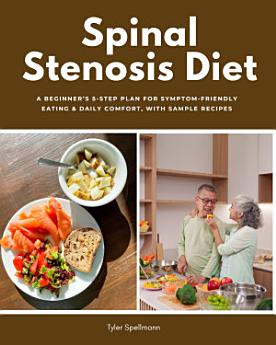
Spinal Stenosis Diet: A Beginner’s 5-Step Plan for Symptom-Friendly Eating & Daily Comfort, with Sample Recipes
About this ebook
This guide is for adults with spinal stenosis, and for the people who cook for them, who want simple meals that need little standing. Inside: 30 recipes with nutrition per serving, a 7-day sample menu with the numbers worked out, a 4-week dinner rotation, a shopping list and a free one-page eating guide. About 130 pages.
The medical sources we reviewed do not list diet as a treatment for spinal stenosis. They name medicines, physical therapy, braces, injections and surgery, along with keeping a healthy weight. So this guide does not promise that food will ease pain or change your spine. It helps you eat well, keep your bowels regular, stay strong and keep a steady weight, so you have energy for the care that does help.
What you get:
- 5 clear steps: balanced basics, whole-body eating, regular bowels, careful weight and portions, and simple routines for days when standing is hard
- 30 recipes you can make seated or leaning on the counter, each with nutrition per serving
- A 7-day sample menu with daily totals, plus a 4-week dinner rotation so you are not deciding every night
- Kitchen setup tips for a sore back, and a full shopping list
- Bowel help for constipation from pain medicine, with fiber and fluid steps you can add slowly
- Emergency signs listed up front, so you know when not to wait
Questions readers ask:
- Can food fix spinal stenosis? No. Food supports your overall care. It does not change the narrowing in your spine.
- Should I lose weight? The guide shows a careful, portion-based approach and tells you when to ask your doctor first.
- What if I can barely stand to cook? Every recipe is chosen for short standing time, with seated prep options.
Who this guide is for: For adults with spinal stenosis, newly diagnosed or living with it for years, and their caregivers. Not a substitute for your doctor or physical therapist. Ask first if you have kidney disease, heart failure, diabetes or take blood thinners.
Draws on guidance from the American Academy of Orthopaedic Surgeons, the Dietary Guidelines for Americans and published studies on weight and spinal stenosis. Recipe nutrition is calculated from USDA data.
Written by Tyler Spellmann for MindPlusFood, a publisher of plain-language, evidence-based food guides for specific health conditions.
If you want calm, practical meals that respect how your back feels today, this guide is a steady place to start.