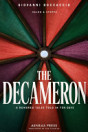
The Decameron: A Hundred Tales Told in Ten Days
Giovanni Boccaccio
Sep 2026 · Aeneas Press
Ebook
915
Pages
family_home
Eligible
info
About this ebook
Ten young Florentines shut themselves in a country villa to escape the plague of 1348 and tell each other a hundred stories in ten days - merchants, nuns, tricksters and unfaithful wives, told without moralising. Boccaccio had watched the plague take his father and stepmother. The frame is grief; almost everything inside it is comedy. Ninety-seven plates of Venetian squares and river cities by Canaletto and Guardi run alongside the tales, matching the restless, worldly energy of the hundred storytellers.
Ten young Florentines shut themselves in a country villa to escape the plague of 1348 and tell each other a hundred stories in ten days - merchants, nuns, tricksters and unfaithful wives, told without moralising. Boccaccio had watched the plague take his father and stepmother. The frame is grief;...
Discover more
About the author
Giovanni Boccaccio (1313-1375) was an Italian writer born near Florence, the son of a banker who sent him to learn trade and canon law. He was a friend of Petrarch and the first public lecturer on Dante. His works include the Decameron, the Filostrato, the Teseida, and the Life of Dante.
Giovanni Boccaccio (1313-1375) was an Italian writer born near Florence, the son of a banker who sent him to learn trade and canon law. He was a friend of Petrarch and the first public lecturer on Dante. His works include the Decameron, the Filostrato, the Teseida, and the Life of Dante.
Rate this ebook
Tell us what you think.
Reading information
Smartphones and tablets
Install the Google Play Books app for Android and iPad/iPhone. It syncs automatically with your account and allows you to read online or offline wherever you are.
Laptops and computers
You can listen to audiobooks purchased on Google Play using your computer's web browser.
eReaders and other devices
To read on e-ink devices like Kobo eReaders, you'll need to download a file and transfer it to your device. Follow the detailed Help Center instructions to transfer the files to supported eReaders.