About this ebook
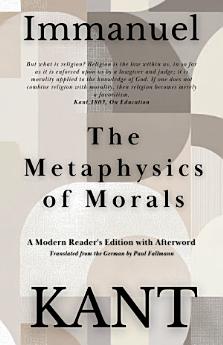
The Doctrine of Right sets out Kant's theory of juridical law, defining rights as conditions under which one's freedom can coexist with the freedom of others under a universal law. It includes his defense of property, contract, the state, and punishment, all rooted in the idea that legal obligations must be capable of external enforcement. In the Doctrine of Virtue, Kant turns to duties that cannot be imposed by force, such as beneficence, self respect, and moral cultivation, arguing that such duties arise from the internal command of reason. Throughout, Kant insists on a strict separation between legality and morality while maintaining that both derive from the autonomy of the will. This work completes his ethical project by laying out the juridical and ethical structure of human freedom in both public and private life.
Law is the inevitable end of Reason, and as such, is rooted in a priori principles native to the soul but not external experience, in other words, metaphysical. The imperative of virtue relies on inner compulsion, while the imperative of legality relies on an external compulsion. In his lifelong rage against the Empiricism of David Hume, Kant here builds a positive structure devoid of polemics. Kant's "Doctrine of Right" would inspire Hegel's 1820 Philosophy of Right, where he would develop a more strong legal theory and a more restrictive social contract.