About this ebook
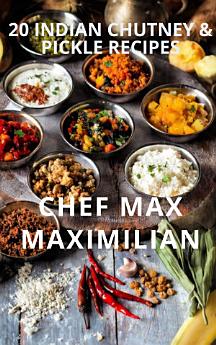
This collection gathers twenty essential recipes drawn from across the Indian Subcontinent: fresh chutneys from South India (coconut, tomato, peanut, gongura) and North India (hari chutney, raw mango); oil-preserved pickles from Rajasthan, Punjab, and the Konkan coast (mango achar, lime pickle, garlic pickle, prawn pickle, ker sangri); cooked relishes and thokku from Tamil Nadu; and the unique walnut chutney of Kashmir.
The distinction between chutney and pickle in Indian cooking is not always clear-cut. Fresh chutneys (hari chutney, coconut chutney) are made daily and eaten the same day. Cooked chutneys (imli chutney, tomato thokku, onion chutney) keep for days or weeks. Achaar (oil pickles) are preserved for months or years in mustard oil, their flavours deepening over time.
Every recipe in this book has been tested for both flavour and preservation. The pickle recipes in particular require attention to the fundamentals of preservation: complete dryness, sufficient salt, and adequate oil coverage. These are not difficult principles, but they are non-negotiable.
Begin with the hari chutney and the imli chutney -- the two pillars of Indian street food, without which no chaat is complete. Then try your first mango pickle in May or June when raw mangoes are in the market. There is no more satisfying kitchen project than a jar of home-made achar maturing in the sun.
Ratings and reviews
About the author
Chef Max Maximilian is one of the world's foremost authorities on Indian cuisine. His Indian Kitchen series -- 20 Indian Dosa Recipes, 25 Indian Paneer Recipes, 30 Indian Dessert Recipes, 25 Indian Street Food Recipes, and 30 World Soup Recipes -- has established him as one of the most trusted and respected voices in world food writing.
20 Indian Chutney and Pickle Recipes completes his survey of the foundational elements of Indian home cooking. He has spent years learning chutney and pickle traditions from home cooks, street vendors, and preserving specialists across every region of India, from the raw mango pickle traditions of Punjab to the gongura chutneys of Andhra Pradesh and the walnut chutneys of Kashmir.
He believes that the condiment is the most personal expression of a cuisine -- the place where a cook's individual taste, regional tradition, and kitchen philosophy are most directly expressed. No two families make the same achar; no two regions make the same coconut chutney. These recipes are starting points. The best versions will always be your own.