Theaetetus

· Prabhat Prakashan
Ebook
197
Pages
Tools

About this ebook

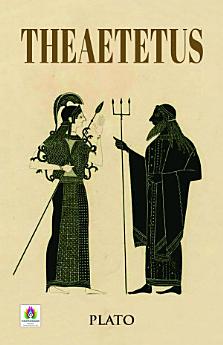
Theaetetus is a profound philosophical dialogue by Plato that delves deep into the essence of knowledge, engaging readers in a rich discourse that challenges conventional thinking. This masterpiece invites the audience to explore the intricate relationship between knowledge and perception, as two characters, Socrates and Theaetetus, navigate the complex landscape of epistemology. The dialogue begins with an exploration of the foundational question: What is knowledge? As Theaetetus, a young mathematician, and Socrates engage in spirited debate, readers are treated to a vivid examination of the theories that define what it means to know.

Throughout the dialogue, Plato employs the Socratic method, a technique that encourages rigorous questioning and critical thinking. As the participants reason through the definitions of knowledge, they confront challenging notions that link knowledge to sense perception, thereby interrogating the reliability of human senses. Theaetetus builds upon various ideas such as the distinction between knowledge and opinion, ultimately leading to a deeper understanding of the nature of existence and reality.

This dialogue is not merely an academic exercise; it resonates with the reader’s own quest for wisdom and understanding. Plato's exploration of knowledge opens a multitude of philosophical avenues, ranging from the nature of truth to the implications of mathematical knowledge. The dialogue implores us to rethink our assumptions and recognize the limits of our comprehension, making it a vital text for anyone eager to engage with philosophical inquiry.

As part of Plato's extensive oeuvre, Theaetetus stands out for its rich argumentative structure and the foundational ideas it presents regarding the philosophy of science and the quest for true understanding. It provides a historical lens on how ancient thinkers grappled with issues still relevant today. With its intricate layering of thought and questioning, this book is an essential addition to the libraries of students, scholars, and curious minds alike.

Whether you are a seasoned philosopher or a newcomer to Plato's works, Theaetetus offers insights that remain relevant—the exploration of knowledge remains at the forefront of human experience, bridging the gap between the ancient and the modern. In engaging with this dialogue, you embark on a timeless journey into the depths of thought, guiding yourself through the rich tapestry of human understanding woven by one of history's greatest thinkers. Join Socrates and Theaetetus in this enlightening dialogue, and ignite your passion for knowledge and intellectual discovery.
Theaetetus is a profound philosophical dialogue by Plato that delves deep into the essence of knowledge, engaging readers in a rich discourse that challenges conventional thinking. This masterpiece invites the audience to explore the intricate relationship between knowledge and perception, as two...

About the author

Plato was born c. 427 B.C. in Athens, Greece, to an aristocratic family very much involved in political government. Pericles, famous ruler of Athens during its golden age, was Plato's stepfather. Plato was well educated and studied under Socrates, with whom he developed a close friendship. When Socrates was publically executed in 399 B.C., Plato finally distanced himself from a career in Athenian politics, instead becoming one of the greatest philosophers of Western civilization. Plato extended Socrates's inquiries to his students, one of the most famous being Aristotle. Plato's The Republic is an enduring work, discussing justice, the importance of education, and the qualities needed for rulers to succeed. Plato felt governors must be philosophers so they may govern wisely and effectively. Plato founded the Academy, an educational institution dedicated to pursuing philosophic truth. The Academy lasted well into the 6th century A.D., and is the model for all western universities. Its formation is along the lines Plato laid out in The Republic. Many of Plato's essays and writings survive to this day. Plato died in 347 B.C. at the age of 80.
Plato was born c. 427 B.C. in Athens, Greece, to an aristocratic family very much involved in political government. Pericles, famous ruler of Athens during its golden age, was Plato's stepfather. Plato was well educated and studied under Socrates, with whom he developed a close friendship. When S...

Rate this ebook

Tell us what you think.

Reading information

Smartphones and tablets
Install the Google Play Books app for Android and iPad/iPhone. It syncs automatically with your account and allows you to read online or offline wherever you are.
Laptops and computers
You can listen to audiobooks purchased on Google Play using your computer's web browser.
eReaders and other devices
To read on e-ink devices like Kobo eReaders, you'll need to download a file and transfer it to your device. Follow the detailed Help Center instructions to transfer the files to supported eReaders.