The Future of Military Engines
Oct 2021 · Bloomsbury Publishing PLC
Ebook
83
Pages
About this ebook
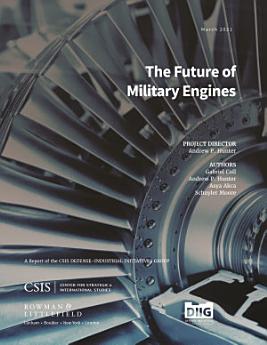
CSIS's The Future of Military Engines looks at the state of the U.S. military engine industrial base and the choices confronting policymakers at the Department of Defense (DoD). The military engine industrial base is closely tied to the industrial base for commercial engines. U.S. engine providers use many of the same facilities and largely the same supply chain for military and commercial engines. The ability to leverage commercial supply chains is critical because supply chain quality underlies the performance advantage of U.S. military engines, both for individual aircraft and military aircraft fleets. International competitors such as Russia and China are seeking to overtake the U.S. in engines. However, the current U.S. advantage is sustainable if it is treated as a national priority. Many military aircraft, especially fighters, require engines with important differences from commercial aircraft. They fly different flight profiles and perform different jobs. These differences mean that while DoD can leverage the commercial engine industrial base, it must also make investments to sustain the industrial base’s unique military components. In the next few years, DoD investment in military engines is projected to decrease significantly, particularly for R&D. This presents a challenge as military-unique engineering skills are highly perishable. Four major policy choices confront DoD as it formulates its investment approach to military engines going forward: 1) Priority, 2) Resources, 3) Business Model, and 4) Competition. The DoD is at an inflection point for engine investment, and the time for choosing on these four key policy questions will come in the next few years.
CSIS's The Future of Military Engines looks at the state of the U.S. military engine industrial base and the choices confronting policymakers at the Department of Defense (DoD). The military engine industrial base is closely tied to the industrial base for commercial engines. U.S. engine provider...
About the author
Gabriel Coll was a program manager and research associate for the Defense-Industrial Initiatives Group at the Center for Strategic and International Studies (CSIS) from 2015 to 2020. Andrew P. Hunter is a senior fellow in the International Security Program and director of the Defense-Industrial Initiatives Group at CSIS. Asya Akca was a program manager and research associate for the Defense-Industrial Initiatives Group at CSIS from 2018 to 2020. Schuyler Moore was a research intern in the Defense-Industrial Initiatives Group at CSIS in 2018.
Gabriel Coll was a program manager and research associate for the Defense-Industrial Initiatives Group at the Center for Strategic and International Studies (CSIS) from 2015 to 2020. Andrew P. Hunter is a senior fellow in the International Security Program and director of the Defense-Industrial I...
Rate this ebook
Tell us what you think.
Reading information
Smartphones and tablets
Install the Google Play Books app for Android and iPad/iPhone. It syncs automatically with your account and allows you to read online or offline wherever you are.
Laptops and computers
You can listen to audiobooks purchased on Google Play using your computer's web browser.
eReaders and other devices
To read on e-ink devices like Kobo eReaders, you'll need to download a file and transfer it to your device. Follow the detailed Help Center instructions to transfer the files to supported eReaders.