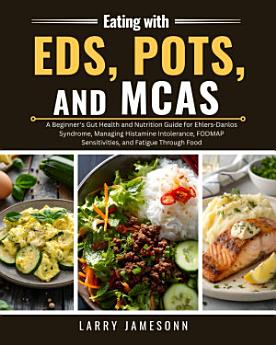
Eating with EDS, POTS, and MCAS: A Beginner's Gut Health and Nutrition Guide for Ehlers-Danlos Syndrome, Managing Histamine Intolerance, FODMAP Sensitivities, and Fatigue Through Food
About this ebook
Written by Larry Jamesonn, who turns dense medical research and clinical guidance into plain-English guides, it is organized for real daily use. It opens with a safety chapter that lists the warning signs that need urgent help and the cautions that apply before anyone changes salt, fluids, or supplements. It then explains how the three conditions interact in the digestive system and gives readers repeatable tools instead of one fixed diet.
What the guide covers:
- Symptom mapping, a food and symptom diary, and a graduated response scale for spotting triggers
- A modular Safe Plate framework with a substitution chart for common intolerances
- Salt, fluid, and electrolyte basics with an honest summary of the limited evidence
- Meal timing, portion sizing, and planning for low-energy and high-flare days
- Grocery shopping, label reading, storage, and kitchen workflow for sensitive households
- Eating out, social events, and travel, with scripts and a backup-food checklist
- 25 adaptable recipes, a 7-day sample meal plan, an FAQ, and more than 40 cited sources
The guide stays within its scope. It does not cover supplement regimens, pediatric adaptations, or medical diagnosis, and it states clearly that diet does not treat these conditions. That clear scope and cited sourcing suit libraries, patient resource collections, and retailers serving the chronic illness, dysautonomia, and digestive health categories.
Readers also receive a free printable with a diary page, a Safe Plate checklist, and questions for their care team.
A structured, honest starting point for eating well with hEDS, POTS, and MCAS.