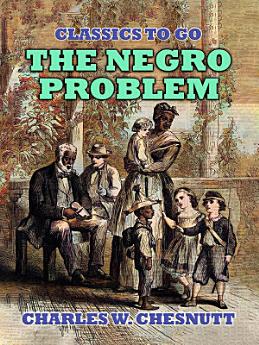
The Negro Problem: Restored Classics to Go Edition
About this ebook
About the author
Charles W. Chesnutt (1858-1932) was a pioneering African American author, lawyer, and social reformer whose works explored the complexities of race and identity in post-Civil War America. Born in Cleveland, Ohio, to free Black parents, Chesnutt's early life in the South during Reconstruction deeply influenced his literary voice. He became one of the first African American writers to gain national recognition, breaking racial barriers with his poignant short stories and novels.Chesnutt's writing often delved into the nuanced lives of mixed-race individuals, challenging the simplistic racial binaries of his time. His works, such as "The Conjure Woman" and "The Marrow of Tradition," are celebrated for their sophisticated narrative techniques and their unflinching examination of the social and political issues facing African Americans. Chesnutt's ability to weave folklore with social commentary made his stories both compelling and thought-provoking.A notable controversy in Chesnutt's career was his candid critique of both white supremacy and the limitations of the African American elite's approach to racial uplift. This dual criticism positioned him as a revolutionary thinker who was unafraid to confront uncomfortable truths. His advocacy for civil rights extended beyond his writing; he was actively involved in the NAACP and used his legal expertise to fight for justice.Chesnutt's influence on contemporary writers is profound. He paved the way for future generations of African American authors, including Langston Hughes and Ralph Ellison, by demonstrating the power of literature to effect social change. His legacy endures as a testament to the enduring struggle for racial equality and the transformative potential of the written word.