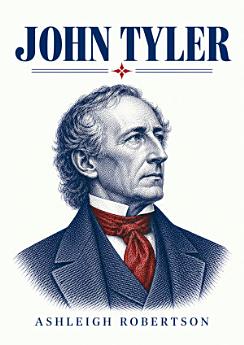
John Tyler
About this ebook
Tyler immediately asserted the full powers of the presidency, establishing the “Tyler Precedent” that guided later successions. His refusal to support the Whig program of a national bank and protective tariffs led to his expulsion from the party, making him the only president ever cast out by the organization that elected him. Despite political isolation, his administration achieved notable results: the Webster-Ashburton Treaty with Britain, the Treaty of Wanghia with China, and—most consequentially—the annexation of Texas.
The book also examines Tyler’s personal life, including the death of his first wife, Letitia, in the White House and his marriage to Julia Gardiner (making him the first president to marry while in office), as well as his record as the father of fifteen children. After leaving office he returned to his plantation, Sherwood Forest. In 1861 he chaired the failed Washington Peace Conference, then voted for Virginia’s secession and was elected to the Confederate Congress. He died in Richmond in January 1862.
A balanced assessment of a controversial figure, the biography places Tyler’s constitutional, diplomatic, and territorial contributions alongside his lifelong defense of slavery and his final allegiance to the Confederacy.