About this ebook
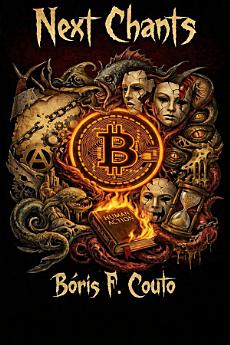
This surreal and transgressive political allegory weaves together the hallucinatory prose of Gothic tradition with the rigorous economic insights of the Austrian School. Set in the 'City of the Plan,' a dystopian labyrinth ruled by a 'Central Machine' and bureaucratic priests, the story follows a series of haunting archetypes like Jerônimo the Hour Digger and Dourina as they navigate a world where individual freedom is consumed by central planning. Through vivid metaphors of 'legal currency moths' and poisoned fountains, the narrative explores the 'Cantillon Effect' and the psychological study of institutionalized evil known as Ponerology. As the state manipulates currency and language to extract human vitality, the work serves as a biting philosophical critique of fiat money, central banking, and the erosion of private property. It is a visceral call for intellectual resistance, celebrating spontaneous order and the resilience of the human spirit against the soul-devouring leviathan of bureaucratic tyranny. Comparable works include The Maldoror (Les Chants de Maldoror)
This surreal and transgressive political allegory weaves together the hallucinatory prose of Gothic tradition with the rigorous economic insights of the Austrian School. Set in the 'City of the Plan,' a dystopian labyrinth ruled by a 'Central Machine' and bureaucratic priests, the story follows a...
Discover more
Ratings and reviews
1 review

Bóris Couto
- Flag inappropriate
- Show review history
April 7, 2026
This work is an abysmal dive into an ocean of fury and refinement, capturing with surgical precision the essence of Isidore Lucien Ducasse. As we peruse its pages, we are transported back to the corners of Maldoror, where beauty is "the fortuitous encounter of an umbrella and a sewing machine on an autopsy table." The author not only emulates Lautréamont's style; he invokes it, bringing to the present that metaphysical revolt and the incandescent language that defies human logic. The homage is pulsating, manifesting itself in metaphors and a vocabulary that oscillates between the scientific and the dreamlike. It is a book that is not read, but suffered and admired. Each paragraph is a monument to the "vampire of Montevideo," honoring the audacity of a young man who dared to dissect morality with the scalpel of extreme poetry. It is, without a doubt, a visceral tribute to those who find in the bizarre and the sublime their true literary home. A rare piece of dark genius.
Rate this ebook
Tell us what you think.
Reading information
Smartphones and tablets
Install the Google Play Books app for Android and iPad/iPhone. It syncs automatically with your account and allows you to read online or offline wherever you are.
Laptops and computers
You can listen to audiobooks purchased on Google Play using your computer's web browser.
eReaders and other devices
To read on e-ink devices like Kobo eReaders, you'll need to download a file and transfer it to your device. Follow the detailed Help Center instructions to transfer the files to supported eReaders.