About this ebook
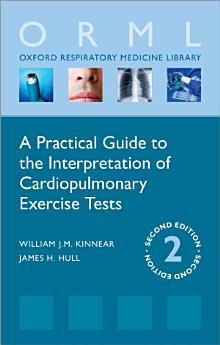
Maximum oxygen uptake during exercise is one of the best predictors of operative mortality and of prognosis in chronic cardiac or respiratory disease. Cardiopulmonary exercise tests (CPET) are therefore an increasingly common component of pre-operative assessment and the management of patients with chronic cardiopulmonary problems. Part of the Oxford Respiratory Medicine Library (ORML) series, A Practical Guide to the Interpretation of Cardiopulmonary Exercise Tests, Second Edition provides readers with a practical, concise, and accessible approach to all aspects of cardiopulmonary exercise tests (CPET). CPET is often perceived as being incredibly complex to evaluate so this book breaks down interpretation to simple steps, allowing readers to rapidly understand the key points underpinning the application and interpretation of CPET. The text is focused and with the use of a substantial number of figures, learning points, and self-test questions helps readers to build confidence in undertaking and interpreting CPET. The second edition has been extended and extensively revised in line with the latest international guidelines and evidence, and includes 16 fully updated chapters, 4 new chapters, and a new section of worked examples has been added.
Maximum oxygen uptake during exercise is one of the best predictors of operative mortality and of prognosis in chronic cardiac or respiratory disease. Cardiopulmonary exercise tests (CPET) are therefore an increasingly common component of pre-operative assessment and the management of patients wi...
About the author
William Kinnear is a Consultant Respiratory Physician at Circle Nottingham, Nottingham NHS Treatment Centre, Queen's Medical Centre Campus, Nottingham, UK and a Senior Lecturer in Sport Science at Nottingham Trent University. He studied at University College London and Westminster Hospital Medical School. He trained at the Brompton Hospital in London, Papworth Hospital and Addenbrooke's Hospital in Cambridge before moving to Nottingham. A Wellcome scholarship enabled him to spend a year at Erasmus Hospital in Brussels, developing his interest in respiratory muscle physiology. He worked as a consultant respiratory physician at the Queens Medical Centre in Nottingham for 25 years, setting up the regional non-invasive ventilation and sleep services. He introduced cardio-pulmonary exercise testing in the lung function laboratory and has published widely in the field of respiratory physiology. James H. Hull, PhD, FRCP, FACSM is a Consultant Respiratory Physician at the Royal Brompton Hospital, London, UK and Hon. Associate Professor at the Institute of Sport, Exercise and Health (ISEH), UCL, London. His interest in exercise testing started with an undergraduate degree in exercise physiology at St George's Hospital Medical School with Professor Brian Whipp. He later completed a PhD in vascular physiology and was then awarded a National Institute for Health Research Clinical Lectureship, during which he spent time at UCLA, California developing expertise in clinical exercise testing. He currently personally supervises over 250 CPET tests per year, as lead for the clinical unexplained breathlessness service at the Royal Brompton.
William Kinnear is a Consultant Respiratory Physician at Circle Nottingham, Nottingham NHS Treatment Centre, Queen's Medical Centre Campus, Nottingham, UK and a Senior Lecturer in Sport Science at Nottingham Trent University. He studied at University College London and Westminster Hospital Medica...
Rate this ebook
Tell us what you think.
Reading information
Smartphones and tablets
Install the Google Play Books app for Android and iPad/iPhone. It syncs automatically with your account and allows you to read online or offline wherever you are.
Laptops and computers
You can listen to audiobooks purchased on Google Play using your computer's web browser.
eReaders and other devices
To read on e-ink devices like Kobo eReaders, you'll need to download a file and transfer it to your device. Follow the detailed Help Center instructions to transfer the files to supported eReaders.