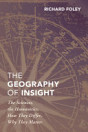
When Is True Belief Knowledge?
júl. 2012 · Princeton University Press
Rafbók
168
Síður
family_home
Gjaldgeng
info
Um þessa rafbók
A woman glances at a broken clock and comes to believe it is a quarter past seven. Yet, despite the broken clock, it really does happen to be a quarter past seven. Her belief is true, but it isn't knowledge. This is a classic illustration of a central problem in epistemology: determining what knowledge requires in addition to true belief.
In this provocative book, Richard Foley finds a new solution to the problem in the observation that whenever someone has a true belief but not knowledge, there is some significant aspect of the situation about which she lacks true beliefs--something important that she doesn't quite "get." This may seem a modest point but, as Foley shows, it has the potential to reorient the theory of knowledge. Whether a true belief counts as knowledge depends on the importance of the information one does or doesn't have. This means that questions of knowledge cannot be separated from questions about human concerns and values. It also means that, contrary to what is often thought, there is no privileged way of coming to know. Knowledge is a mutt. Proper pedigree is not required. What matters is that one doesn't lack important nearby information.
Challenging some of the central assumptions of contemporary epistemology, this is an original and important account of knowledge.
A woman glances at a broken clock and comes to believe it is a quarter past seven. Yet, despite the broken clock, it really does happen to be a quarter past seven. Her belief is true, but it isn't knowledge. This is a classic illustration of a central problem in epistemology: determining what kno...
Um höfundinn
Richard Foley is professor of philosophy and vice chancellor for strategic planning at New York University. He is the author of Intellectual Trust in Oneself and Others,
Working Without a Net: A Study of Egocentric Epistemology, and The Theory of Epistemic Rationality.
Richard Foley is professor of philosophy and vice chancellor for strategic planning at New York University. He is the author of Intellectual Trust in Oneself and Others,
Working Without a Net: A Study of Egocentric Epistemology, and The Theory of Epistemic Rationality.
Gefa þessari rafbók einkunn.
Segðu okkur hvað þér finnst.
Upplýsingar um lestur
Snjallsímar og spjaldtölvur
Settu upp forritið Google Play Books fyrir Android og iPad/iPhone. Það samstillist sjálfkrafa við reikninginn þinn og gerir þér kleift að lesa með eða án nettengingar hvar sem þú ert.
Fartölvur og tölvur
Hægt er að hlusta á hljóðbækur sem keyptar eru í Google Play í vafranum í tölvunni.
Lesbretti og önnur tæki
Til að lesa af lesbrettum eins og Kobo-lesbrettum þarftu að hlaða niður skrá og flytja hana yfir í tækið þitt. Fylgdu nákvæmum leiðbeiningum hjálparmiðstöðvar til að flytja skrár yfir í studd lesbretti.