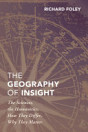
When Is True Belief Knowledge?
juil. 2012 · Princeton University Press
E-book
168
Pages
family_home
Éligible
info
À propos de cet e-book
A woman glances at a broken clock and comes to believe it is a quarter past seven. Yet, despite the broken clock, it really does happen to be a quarter past seven. Her belief is true, but it isn't knowledge. This is a classic illustration of a central problem in epistemology: determining what knowledge requires in addition to true belief.
In this provocative book, Richard Foley finds a new solution to the problem in the observation that whenever someone has a true belief but not knowledge, there is some significant aspect of the situation about which she lacks true beliefs--something important that she doesn't quite "get." This may seem a modest point but, as Foley shows, it has the potential to reorient the theory of knowledge. Whether a true belief counts as knowledge depends on the importance of the information one does or doesn't have. This means that questions of knowledge cannot be separated from questions about human concerns and values. It also means that, contrary to what is often thought, there is no privileged way of coming to know. Knowledge is a mutt. Proper pedigree is not required. What matters is that one doesn't lack important nearby information.
Challenging some of the central assumptions of contemporary epistemology, this is an original and important account of knowledge.
A woman glances at a broken clock and comes to believe it is a quarter past seven. Yet, despite the broken clock, it really does happen to be a quarter past seven. Her belief is true, but it isn't knowledge. This is a classic illustration of a central problem in epistemology: determining what kno...
À propos de l'auteur
Richard Foley is professor of philosophy and vice chancellor for strategic planning at New York University. He is the author of Intellectual Trust in Oneself and Others,
Working Without a Net: A Study of Egocentric Epistemology, and The Theory of Epistemic Rationality.
Richard Foley is professor of philosophy and vice chancellor for strategic planning at New York University. He is the author of Intellectual Trust in Oneself and Others,
Working Without a Net: A Study of Egocentric Epistemology, and The Theory of Epistemic Rationality.
Donner une note à cet e-book
Dites-nous ce que vous en pensez.
Informations sur la lecture
Smartphones et tablettes
Installez l'application Google Play Livres pour Android et iPad ou iPhone. Elle se synchronise automatiquement avec votre compte et vous permet de lire des livres en ligne ou hors connexion, où que vous soyez.
Ordinateurs portables et de bureau
Vous pouvez écouter les livres audio achetés sur Google Play à l'aide du navigateur Web de votre ordinateur.
Liseuses et autres appareils
Pour lire sur des appareils e-Ink, comme les liseuses Kobo, vous devez télécharger un fichier et le transférer sur l'appareil en question. Suivez les instructions détaillées du Centre d'aide pour transférer les fichiers sur les liseuses compatibles.