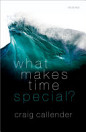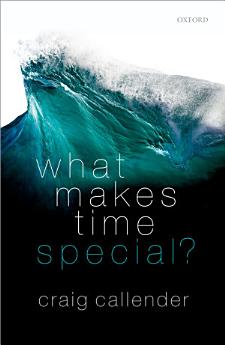
What Makes Time Special?
06/2017 · Oxford University Press
star
1 crítica
Livro eletrónico
336
Páginas
Ferramentas
info
family_home
Elegível
info
Acerca deste livro eletrónico
As we navigate through life we instinctively model time as having a flowing present that divides a fixed past from open future. This model develops in childhood and is deeply saturated within our language, thought and behavior, affecting our conceptions of the universe, freedom and the self. Yet as central as it is to our lives, physics seems to have no room for this flowing present. What Makes Time Special? demonstrates this claim in detail and then turns to two novel positive tasks. First, by looking at the world "sideways" - in the spatial directions -- it shows that physics is not "spatializing time" as is commonly alleged. Even relativity theory makes significant distinctions between the spacelike and timelike directions, often with surprising consequences. Second, if the flowing present is an illusion, it is a deep one worthy of explanation. The author develops a picture whereby the temporal flow arises as an interaction effect between an observer and the physics of the world. Using insights from philosophy, cognitive science, biology, psychology and physics, the theory claims that the flowing present model of time is the natural reaction to the perceptual and evolutionary challenges thrown at us. Modeling time as flowing makes sense even if it misrepresents it.
As we navigate through life we instinctively model time as having a flowing present that divides a fixed past from open future. This model develops in childhood and is deeply saturated within our language, thought and behavior, affecting our conceptions of the universe, freedom and the self. Yet ...
Classificações e críticas
1 crítica
Acerca do autor
Craig Callender earned his PhD with research on the direction of time at Rutgers University. He then worked at the London School of Economics before moving to the University of California, San Diego. He has interests in time and physics, the interpretation of quantum mechanics, quantum gravity, philosophy of science, and environmental ethics. He is editor of the Oxford Handbook of Philosophy of Time (2011).
Craig Callender earned his PhD with research on the direction of time at Rutgers University. He then worked at the London School of Economics before moving to the University of California, San Diego. He has interests in time and physics, the interpretation of quantum mechanics, quantum gravity, p...
Classifique este livro eletrónico
Dê-nos a sua opinião.
Informações de leitura
Smartphones e tablets
Instale a app Google Play Livros para Android e iPad/iPhone. A aplicação é sincronizada automaticamente com a sua conta e permite-lhe ler online ou offline, onde quer que esteja.
Portáteis e computadores
Pode ouvir audiolivros comprados no Google Play através do navegador de Internet do seu computador.
eReaders e outros dispositivos
Para ler em dispositivos e-ink, como e-readers Kobo, tem de transferir um ficheiro e movê-lo para o seu dispositivo. Siga as instruções detalhadas do Centro de Ajuda para transferir os ficheiros para os e-readers suportados.