About this ebook
First, build yourself: strengthen your knowledge, practical skills, health, confidence, discipline and relationships. Next, build your earning power: apply those capabilities to useful problems and learn to recognise and pursue suitable opportunities. Then, build wealth: keep part of what you earn, protect against setbacks and gradually acquire assets appropriate to your circumstances. These are not three separate ambitions. They are three connected parts of the same journey.
YOU → SKILLS → VALUE → INCOME → SURPLUS → ASSETS → COMPOUNDING → FREEDOM
The arrows show a direction, not a guarantee. Your income does not measure your worth, and effort alone cannot remove unequal opportunities or unexpected setbacks. Sometimes the next right step is building an emergency reserve, reducing debt or protecting your household—not buying an investment or paying for training. Progress can pause, change direction and begin again. Your plan must fit your life, not demand that your life fit a perfect diagram.
This book is for people with real responsibilities: workdays, bills, family commitments and limited energy. You do not need to quit your job, launch a business or monetise everything you enjoy. In the chapters ahead, you will examine which learning is worth your time, how skills connect to earning opportunities, how to create a workable surplus and what to understand before investing it. Alongside the practical decisions, you will explore the habits and emotions that can support—or undermine—the future you are trying to fund.
A Different Definition of Progress
What would progress look like in your life? Perhaps it is earning more. Perhaps it is facing an unexpected bill without borrowing, understanding your retirement savings or recognising an investment scam before money leaves your account. Perhaps it is having enough breathing room to decline an unsuitable opportunity or spend more time with your family. These moments rarely make financial headlines. They are also some of the clearest reasons to build wealth: not to look successful, but to have more security and choice.
Keep two questions beside you as you read: “What can I strengthen in myself?” and “What can I improve in my money system?” Personal growth without financial habits can leave you more capable but still financially stretched. Financial discipline without room for growth can leave useful opportunities unexplored. Bring the two together, and you have a more complete foundation: a way to develop your potential while giving your money a purpose.
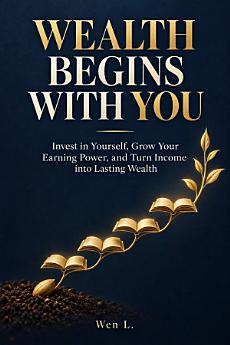
You do not need to transform your finances before turning the next page. You need a starting point: one useful skill, one honest look at your money and one manageable action. The aim is not simply to work harder for the next payslip. It is to connect the work you do today with the choices you want tomorrow. Wealth begins with you. Let us begin there.
Discover more
Ratings and reviews

- Flag inappropriate