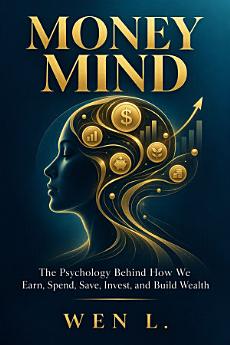
About this ebook
This is not another book telling you to save more, spend less, and invest.
You already know that. So why can a single bad day end with an unnecessary purchase? Why do intelligent people postpone investing for years, stay in jobs that drain them, or earn more only to wonder where the money went?
We know what the sensible choices look like: live within our means, prepare for emergencies, avoid harmful debt, and allow time and compound growth to work for us. The mathematics is often simple. Living by it is not.
If we know what is financially sensible, why don’t we always do it?
That question is the heart of this book—because the distance between knowing and doing is where our real financial story is written.
Money may be counted in numbers, but we experience it through emotion. We spend for comfort, reward, status, belonging, and relief. We save because we feel hopeful—or because we are afraid. We avoid an investment and call it caution, or chase one and call it confidence. A higher income can create freedom, yet it can also expand our expectations until “enough” moves further away.
Long before our first salary, we begin learning what money means. We notice whether it causes arguments or brings reassurance. We hear who is described as rich, wasteful, successful, selfish, or secure. From family, culture, hardship, opportunity, and observation, we form quiet beliefs: money is hard to keep; wanting more is greedy; wealth proves worth; debt is simply part of life; investing is for experts; mistakes must be hidden.
These beliefs do not remain in the past. They follow us into salary negotiations, shopping carts, bank accounts, relationships, and investment decisions. They help explain why two people with the same income can build entirely different lives: one feels secure with less, while another remains anxious with more; one saves easily but is afraid to invest, while another takes risks without understanding what could be lost.
Money Mind looks beneath financial behaviour to uncover the forces driving it. Why do immediate rewards overpower distant goals? Why does comparison change what feels sufficient? Why can more money fail to create more peace? And how can we build wealth without allowing wealth to become the measure of our worth?
This is not a book about shame, perfection, or forcing yourself to become a different person. It is an invitation to see yourself more clearly. Once you recognise the triggers, stories, and habits behind your choices, you gain something more useful than another rule: the ability to respond intentionally instead of automatically.
Financial knowledge still matters. We need to understand debt, budgeting, risk, diversification, and compound growth. But knowledge becomes powerful only when it fits human behaviour. A perfect plan that lives in a notebook is less valuable than a realistic one you can follow through stress, temptation, uncertainty, and change.
The goal is not simply to have more money. It is to create a relationship with money that gives you greater choice, calm, and direction—to earn without losing yourself, spend without regret, save without feeling punished, invest without being controlled by fear or excitement, and build wealth in service of a meaningful life.
Before you can change what you do with money, you must discover what money has come to mean to you. That is where lasting change begins—and where our journey starts.