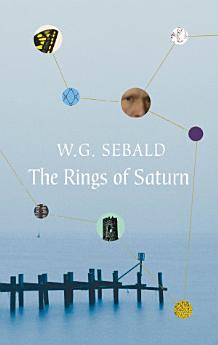
The Rings of Saturn: A haunting walk through Suffolk meditating on history, exile and loss
About this ebook
Beginning with a journey along the Suffolk coast from Lowestoft to Bungay, The Rings of Saturn moves far beyond conventional travel writing. Estates, ruined landscapes, fishing fleets and coastal towns become points of departure for reflections on writers, empires, violence, natural history and the transience of human life.
Sebald's first-person journey draws figures including Thomas Browne, Joseph Conrad and François-René de Chateaubriand into an intricate pattern of association. Local observation repeatedly widens into histories of exile, colonialism, destruction and mourning, then returns to the quiet English landscape through which the narrator walks.
For readers of literary travel writing, essayistic fiction and meditations on memory and history, The Rings of Saturn offers an unusual reading experience: digressive, erudite and deeply atmospheric, with Suffolk's eroding coast holding together a world of vanished people and cultures.
Discover more
Ratings and reviews
About the author
W.G. Sebald was born in Wertach im Allgäu, Germany in 1944. He studied German language and literature in Freiburg, Switzerland and Manchester. In 1966 he took up a position as an assistant lecturer at the University of Manchester, and settled permanently in England in 1970. He was Professor of European Literature at the University of East Anglia, and the author of The Emigrants, which won a series of major awards, including the Berlin Literature Prize, the Heinrich Böll Prize, the Heinrich Heine Prize and the Joseph Breitbach Prize; The Rings of Saturn, and Vertigo. W.G. Sebald wrote in his native tongue, German, and worked closely with his translator, Michael Hulse, to translate his work into English. He died in December 2001.
Michael Hulse has translated Goethe's The Sorrows of Young Werther and Jacob Wasserman's Caspar Hauser, as well as the contemporary German authors Luise Rinser, Botho Strauss and Elfriede Jelinek. He is also an award-winning poet. He lives in Amsterdam.