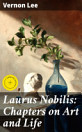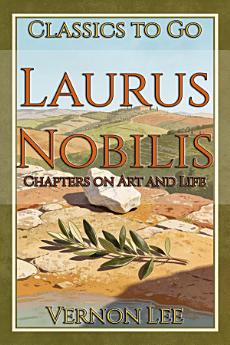
Laurus Nobilis: Restored Classics to Go Edition

· Otbebookpublishing
Ebook
219
Pages
Eligible

About this ebook

Vernon Lee turns a chance sighting—a bay laurel on a Roman tram—into a meditation on why beauty matters at all. From that emblem, she moves outward to art, poetry, landscape, and memory, arguing that beauty is not mere ornament but a living force that can steady the spirit, enlarge sympathy, and give ordinary life moral and emotional meaning. She explores the laurel's presence in Renaissance sculpture, ancient goldwork, and the hills of Fiesole, making it a symbol of art's quiet nobility and enduring power. The essays that follow develop a bold philosophy of aesthetic life: beauty, goodness, and truth are distinct, yet deeply related in human development. Great art, she insists, is not effortless entertainment but a discipline that demands attention, reverence, and intelligence, rewarding the trained soul with deeper harmony and freedom. Against shallow pleasures, social display, and fashionable taste, Lee defends aesthetic experience as a source of character, self-possession, and lasting happiness. Even a crowded train or a playful goat can become, in her hands, an occasion for wonder, humor, and renewed delight in the world. This edition has been fully restored with modern typesetting, custom cover design.
Vernon Lee turns a chance sighting—a bay laurel on a Roman tram—into a meditation on why beauty matters at all. From that emblem, she moves outward to art, poetry, landscape, and memory, arguing that beauty is not mere ornament but a living force that can steady the spirit, enlarge sympathy, and ...

Discover more

About the author

Vernon Lee, the pen name of Violet Paget, was a remarkable English writer, critic, and thinker whose life moved restlessly across Europe and whose work bridged literature, aesthetics, and philosophy with uncommon elegance. Born in 1856 and educated largely through travel, languages, and self-directed study, she became one of the most original intellectual voices of the late Victorian and Edwardian eras, moving in artistic circles while remaining fiercely independent in both thought and lifestyle. Her literary career ranged across essays, fiction, travel writing, and criticism, and she earned lasting distinction for her subtle explorations of beauty, atmosphere, memory, and the emotional power of art. Rather than treating art as something purely decorative, she saw it as deeply tied to perception, ethics, and lived experience, and she wrote with a sensitivity that still feels modern in its attention to psychology and place. Her work often examines the unstable boundary between reality and imagination, the ways environments shape feeling, and the cultural forces that determine what we value as beautiful or meaningful. These concerns remain strikingly relevant today, especially in an age that continues to question identity, representation, and the relationship between art and everyday life. Vernon Lee's legacy lies in her ability to combine intellectual rigor with lyrical prose, making her a vital figure for readers interested in aesthetics, feminist thought, cultural criticism, and the strange, haunting pleasures of finely observed writing. She will especially appeal to readers who enjoy reflective essays, art writing, ghostly or atmospheric fiction, and authors who challenge convention while writing with grace and intelligence.


Vernon Lee, the pen name of Violet Paget, was a remarkable English writer, critic, and thinker whose life moved restlessly across Europe and whose work bridged literature, aesthetics, and philosophy with uncommon elegance. Born in 1856 and educated largely through travel, languages, and self-dire...

Rate this ebook

Tell us what you think.

Reading information

Smartphones and tablets
Install the Google Play Books app for Android and iPad/iPhone. It syncs automatically with your account and allows you to read online or offline wherever you are.
Laptops and computers
You can listen to audiobooks purchased on Google Play using your computer's web browser.
eReaders and other devices
To read on e-ink devices like Kobo eReaders, you'll need to download a file and transfer it to your device. Follow the detailed Help Center instructions to transfer the files to supported eReaders.