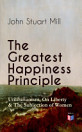
Utilitarianism
Nov. 2021 · Phoemixx Classics Ebooks
star
1 resensie
E-boek
222
Bladsye
family_home
Geskik
info
Meer oor hierdie e-boek
Utilitarianism John Stuart Mill - Utilitarianism is a family of normative ethical theories that prescribe actions that maximize happiness and well-being for all affected individuals. Although different varieties of utilitarianism admit different characterizations, the basic idea behind all of them is to in some sense maximize utility, which is often defined in terms of well-being or related concepts. For instance, Jeremy Bentham, the founder of utilitarianism, described utility as "that property in any object, whereby it tends to produce benefit, advantage, pleasure, good, or happiness...[or] to prevent the happening of mischief, pain, evil, or unhappiness to the party whose interest is considered."Utilitarianism is a version of consequentialism, which states that the consequences of any action are the only standard of right and wrong. Unlike other forms of consequentialism, such as egoism and altruism, utilitarianism considers the interests of all humans equally. Proponents of utilitarianism have disagreed on a number of points, such as whether actions should be chosen based on their likely results (act utilitarianism), or whether agents should conform to rules that maximize utility (rule utilitarianism). There is also disagreement as to whether total (total utilitarianism), average (average utilitarianism) or minimum utility should be maximized.Though the seeds of the theory can be found in the hedonists Aristippus and Epicurus, who viewed happiness as the only good, and in the work of the medieval Indian philosopher ntideva, the tradition of modern utilitarianism began with Jeremy Bentham (1748-1832), and continued with such philosophers as John Stuart Mill, Henry Sidgwick, R. M. Hare, and Peter Singer. The concept has been applied towards social welfare economics, the dropping of the atomic bombs in World War 2, the crisis of global poverty, the ethics of raising animals for food, and the importance of avoiding existential risks to humanity.
Utilitarianism John Stuart Mill - Utilitarianism is a family of normative ethical theories that prescribe actions that maximize happiness and well-being for all affected individuals. Although different varieties of utilitarianism admit different characterizations, the basic idea behind all of the...
Graderings en resensies
1 resensie
Meer oor die skrywer
John Stuart Mill, English philosopher, political economist, civil servant and Member of Parliament, was an influential liberal thinker of the 19th century. He was an exponent of utilitarianism, an ethical theory developed by Jeremy Bentham, although his conception of it was very different from Bentham's.
John Stuart Mill, English philosopher, political economist, civil servant and Member of Parliament, was an influential liberal thinker of the 19th century. He was an exponent of utilitarianism, an ethical theory developed by Jeremy Bentham, although his conception of it was very different from Be...
Gradeer hierdie e-boek
Sê vir ons wat jy dink.
Lees inligting
Slimfone en tablette
Installeer die Google Play Boeke-app vir Android en iPad/iPhone. Dit sinkroniseer outomaties met jou rekening en maak dit vir jou moontlik om aanlyn of vanlyn te lees waar jy ook al is.
Skootrekenaars en rekenaars
Jy kan jou rekenaar se webblaaier gebruik om na oudioboeke wat jy op Google Play gekoop het, te luister.
E-lesers en ander toestelle
Om op e-inktoestelle soos Kobo-e-lesers te lees, moet jy ’n lêer aflaai en dit na jou toestel toe oordra. Volg die gedetailleerde hulpsentrumaanwysings om die lêers na ondersteunde e-lesers toe oor te dra.