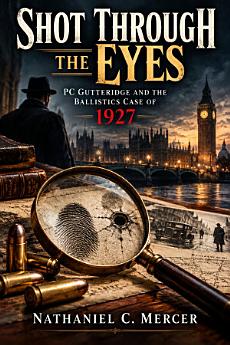
Shot Through the Eyes: PC Gutteridge and the Ballistics Case of 1927
About this ebook
a handful of marks on metal that would help transform British criminal investigation.
In the early hours of 27 September 1927, PC George William Gutteridge was found dead
beside a rural road near Stapleford Abbots. He had been shot four times at close range,
including through both eyes. His killers had vanished into the darkness, leaving investigators
with no surviving eyewitness to explain exactly what had happened.
What followed became one of the most remarkable murder investigations of interwar Britain.
Shot Through the Eyes reconstructs the life and final patrol of PC Gutteridge, the theft of the
Morris Cowley connected to the crime, the hunt for Frederick Guy Browne and William
Kennedy, and the scientific evidence that helped bring the case to trial.
At the center of the investigation was firearms specialist Robert Churchill. By comparing
bullets and a spent cartridge case with test ammunition fired from a recovered Webley
revolver, Churchill helped demonstrate how microscopic markings could connect a firearm to
a crime.
But the case was never as simple as a perfect forensic breakthrough.
Kennedy admitted being present while blaming Browne for the shooting. Browne denied
involvement. The ballistics evidence could identify the suspected murder weapon, but it
could not independently prove whose hand had pulled the trigger.
This book separates documented fact from later interpretation while examining the strengths
and limitations of the forensic methods that helped shape the prosecution.
Inside this true crime history, readers will discover:
The life and police career of George William Gutteridge
The events surrounding his final night patrol
The theft and recovery of the Morris Cowley