About this ebook
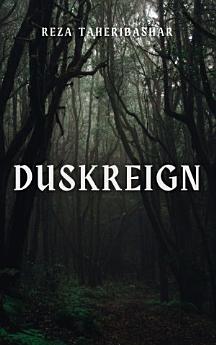
Title: Duskreign
Writer: Reza Taheri Bashar
Genre: Historical Tragedy – Political Drama – Epic
Time and Place: Ancient Iran, during the Parthian or Sassanian Empire
Format: Feature Film Story and Screenplay
Estimated Runtime: 120–150 minutes
________________________________________
Part One: About the Story
" Duskreign " is a historical-tragic story set in the mysterious and majestic world of ancient Iran. The story portrays the collapse of a royal dynasty—a collapse caused not by external enemies, but from within the court itself, by the hands of those closest to the throne.
Navand, the Crown Princess and Commander of the Iranian army, returns to the capital after a year of brutal war with the Romans—defeated, wounded, and broken. Once the bearer of the royal banner on the battlefield, she now stands before her people with a wounded body and a tormented soul. But what awaits her in the capital is far more deadly than any war.
The Queen, Navand's mother, struggles to preserve the crown through political cunning and deception. As the wife of a dying king, she enters a dangerous political game with General Gracchus, the young and ruthless Roman commander. In this game, every mistake is fatal, and every promise may turn into a great betrayal. The Queen, through secret promises and seduction, has persuaded Gracchus to delay his attack on Iran—but the price of this game is the trust of her children and the destiny of her country.
Atbin, Navand's brother, lurks in the shadows, waiting for an opportunity to seize power. Crushed for years under the shadow of his elder sister, he now seeks revenge and the crown through conspiracy and intrigue. He spreads rumors, recruits spies, and waits for the perfect moment to strike.
Meanwhile, the dying King lies on his deathbed, watching the collapse of his dynasty, powerless to stop it. Once the most powerful man in Iran, he now witnesses the destruction of everything he built, torn between love for his wife and loyalty to tradition.
________________________________________
Part Two: Characters
Navand – The tragic heroine. She is torn between loyalty to her family and loyalty to her ideals. Navand embodies honor, courage, and love, but in the end, she loses everything.
The Queen – A complex, multi-layered character. She appears to be a cold politician, but deep down, she is a loving and devoted wife and mother, ultimately betrayed by her own children. In her political maneuvering, she crosses moral boundaries and pays a heavy price for her choices.
Atbin – A psychologically deep antagonist. He is neither completely evil nor completely helpless. Atbin embodies jealousy, rejection, and the hunger for power. He waits in the shadows for the right moment to strike.
Gracchus – The symbol of Rome's ruthless power. He is more than a military antagonist—he is a mirror for Navand's own conflicts. Gracchus is proud, lustful, and merciless, viewing Iran only as a prize for the Roman Empire.
The King – An old, ailing ruler trapped between love for his wife and loyalty to tradition. His death is the turning point of the screenplay.
________________________________________
Part Three: Themes and Motifs
Betrayal and Trust – The story masterfully shows how doubt and suspicion can shatter even the strongest family bonds. Every character suspects the others, and this mutual distrust leads to the destruction of all.
Honor vs. Survival – Should one die with honor or live in humiliation? Both Navand and the Queen grapple with this question.
Politics and Morality – The screenplay demonstrates how political maneuvering, even with the best intentions, can lead to catastrophe.
Power and Madness – Atbin, and to some extent Navand, show how the thirst for power can cloud the mind.
Free Will vs. Fate – Each character shapes their own destiny through their choices. No one is a mere victim of blind fate.
________________________________________
Part Four: Strengths of the Story
• Universal story with Iranian roots – suitable for international audiences
• Complex, multi-layered, tragic characters
• Psychological and dramatic tension – ideal for art-house and festival cinema
• A surprising and powerful ending that keeps the audience engaged until the final moment
• High potential for renowned actors – strong roles for both male and female performers
• Rich visual world – ancient Iran, epic battles, palaces, churches, deserts, and mountains
• Poetic and majestic dialogue – suitable for art-house and festival films
________________________________________
Part Five: Author's Statement
This story is written in the tradition of Shakespeare and Ferdowsi. As the writer, I explore the fundamental questions of human existence: the nature of evil, the struggle between good and darkness, the reality of free will, and the price of power. I believe that " Duskreign " can find its rightful place in world cinema and captivate audiences everywhere.
________________________________________
Part Six: Suitable for
• International Film Festivals (Cannes, Berlin, Venice, Toronto)
• Producers of historical and art-house cinema
• Investors interested in epic and tragic films
• Television networks and streaming platforms (Netflix, Amazon, MUBI, etc.)