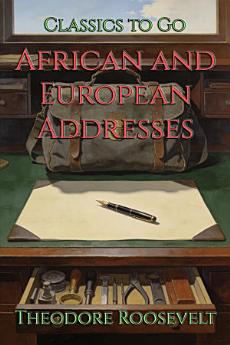
African and European Addresses: Restored Classics to Go Edition
About this ebook
Discover more
About the author
Theodore Roosevelt was a larger-than-life American statesman, soldier, naturalist, reformer, and writer whose energy seemed to touch every corner of public life at the turn of the twentieth century. Born into a privileged New York family, he overcame frail childhood health through discipline and determination, then moved rapidly from scholarly pursuits and public service into state politics, federal office, the presidency, and later a celebrated role as an elder statesman and world traveler. Along the way, he became an extraordinarily prolific author, producing histories, political essays, memoirs, and speeches that helped define the ideals of American leadership, civic duty, and national strength. His writing often returns to themes of courage, hard work, moral purpose, conservation, and the responsibilities of power, while also reflecting his interest in international affairs and the place of the United States in a changing world. What makes Roosevelt especially relevant today is the tension in his legacy: he championed reform and public-minded government, yet also embodied the forceful confidence and imperial assumptions of his era, inviting modern readers to think critically about leadership, ambition, and national identity. His essays and addresses remain compelling for their vigor, conviction, and historical insight, and they continue to speak to readers interested in politics, history, public life, and the personality of a leader who helped shape modern America.